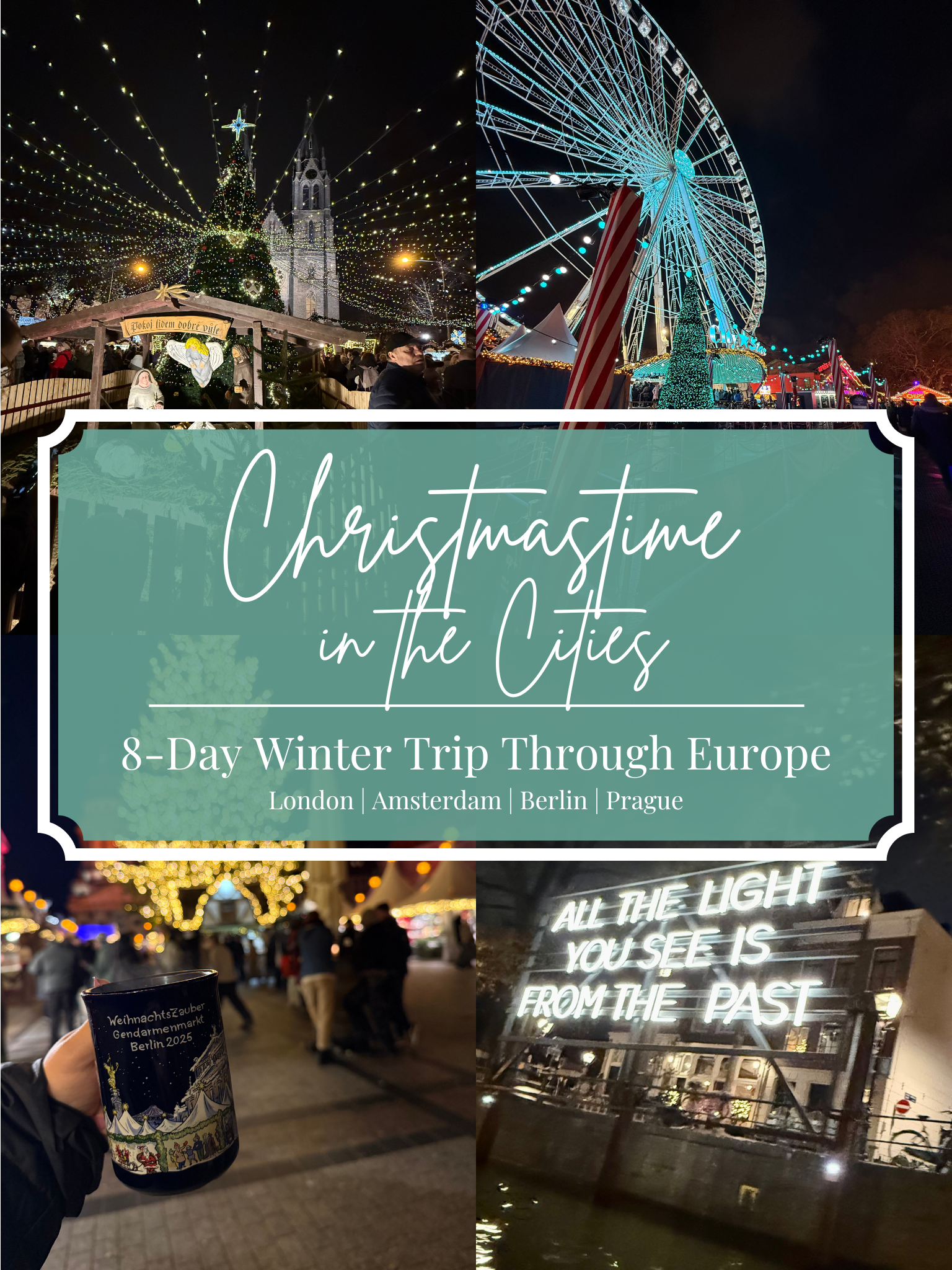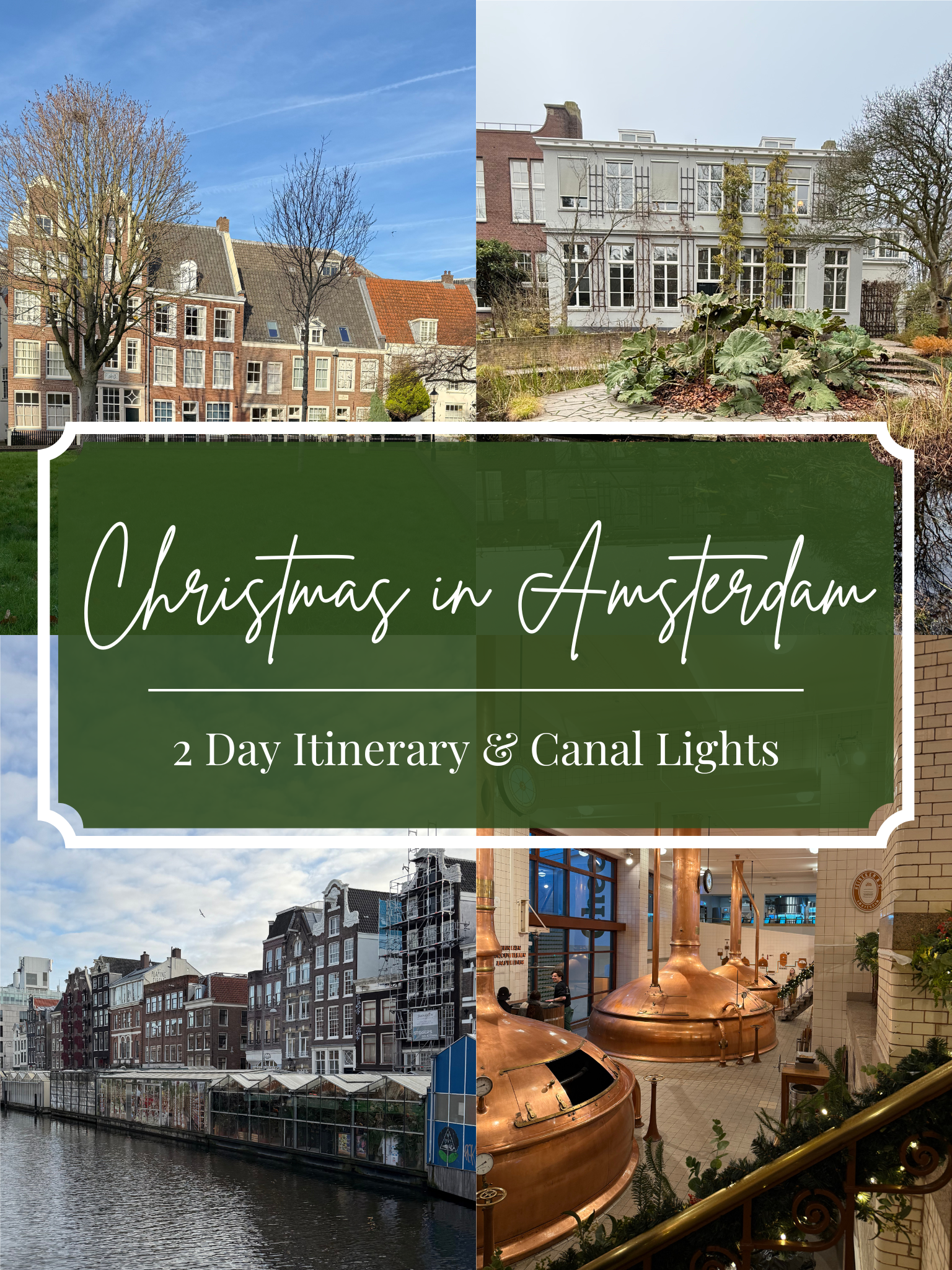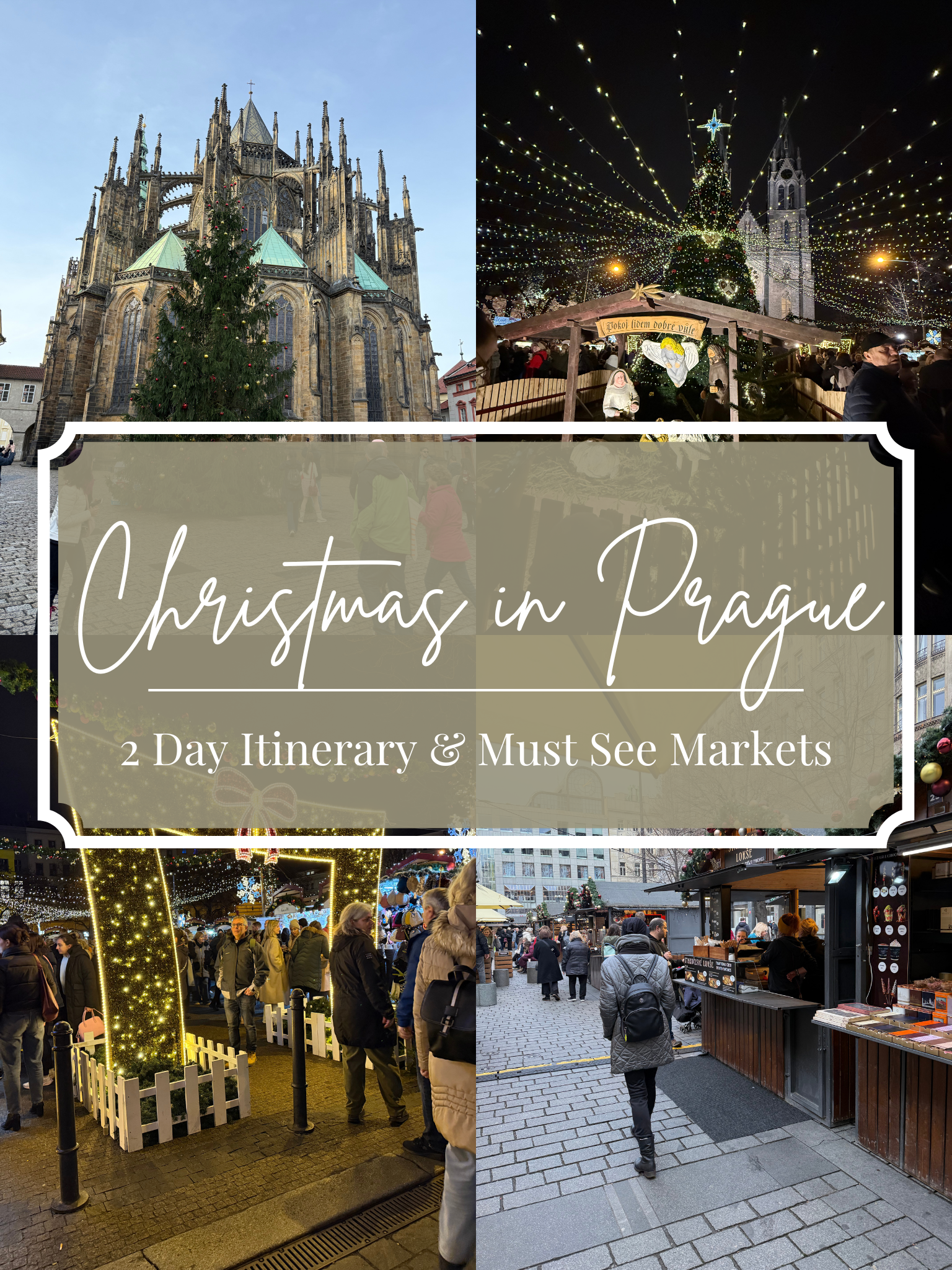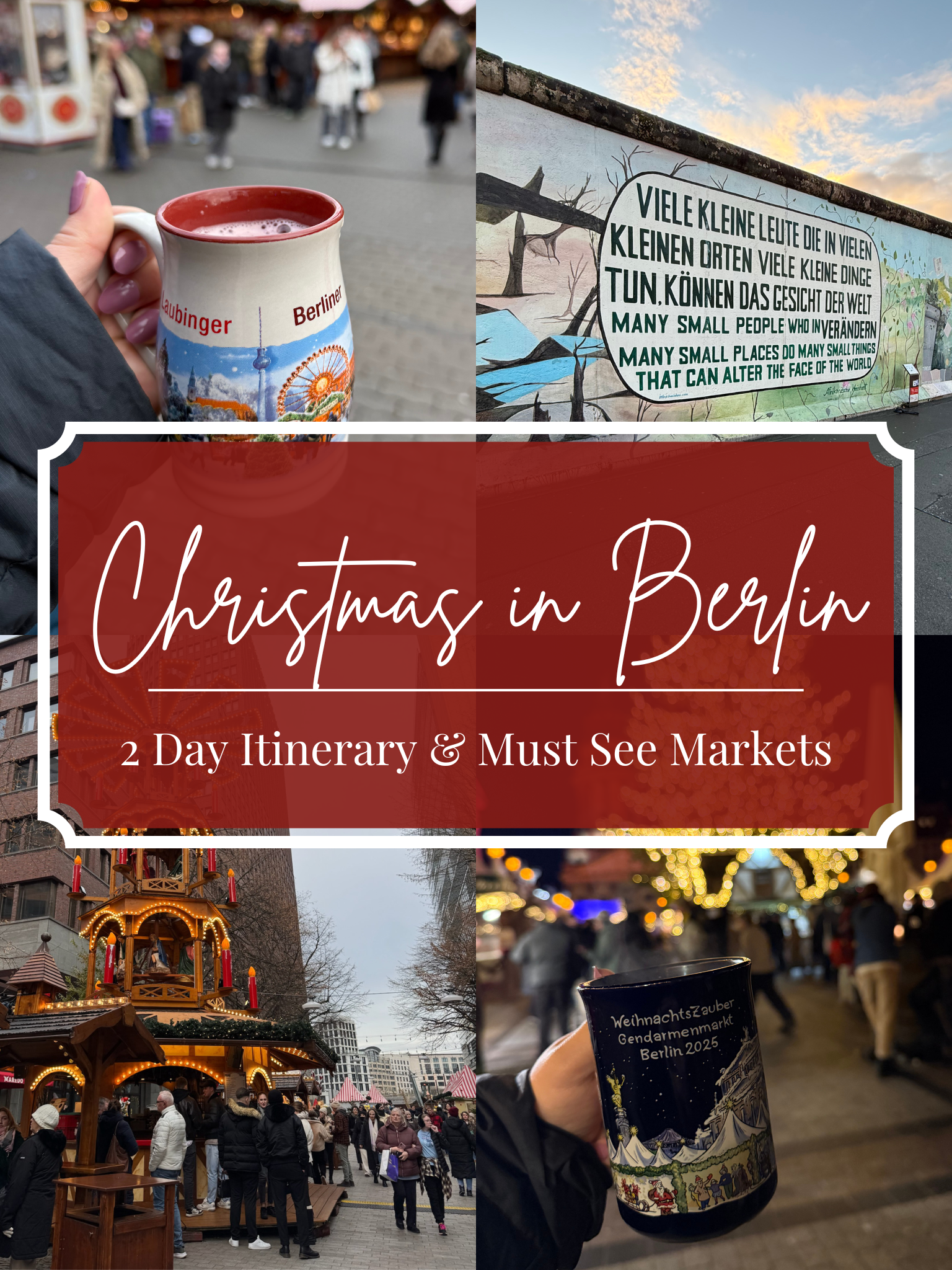
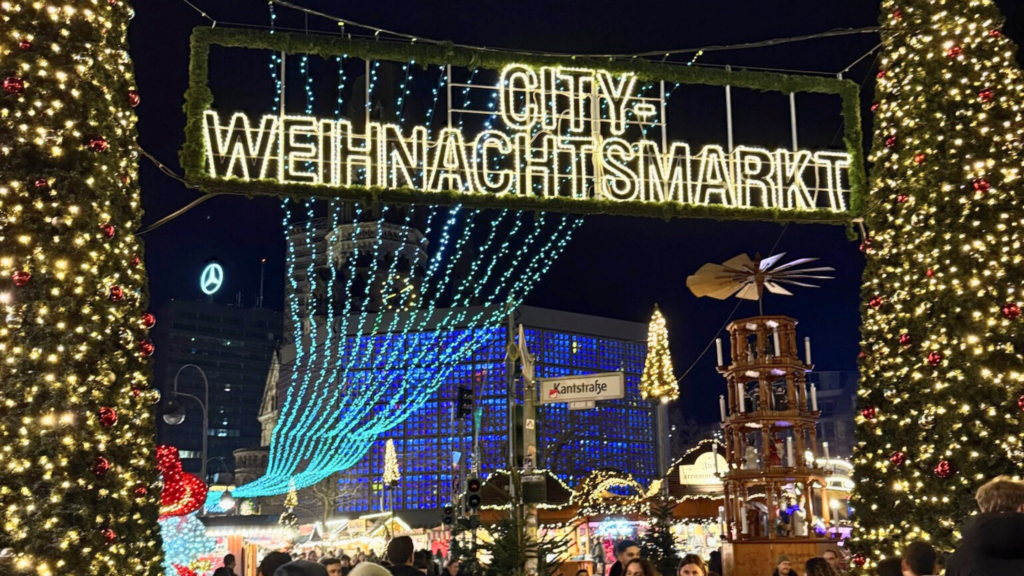
Berlin is a city where history feels immediate and layered, woven into everyday streets, museums, and public spaces. Visiting in December added an atmospheric backdrop of Christmas markets and winter light, creating a trip that balanced reflection, culture, and festive moments across two full days of exploring.
Plan Your Berlin Trip
At A Glance | Day-by-Day | Christmas Markets | Top Historic Sites | Food & Drink | Getting Around | Practical Tips | Reflections
Berlin at a Glance
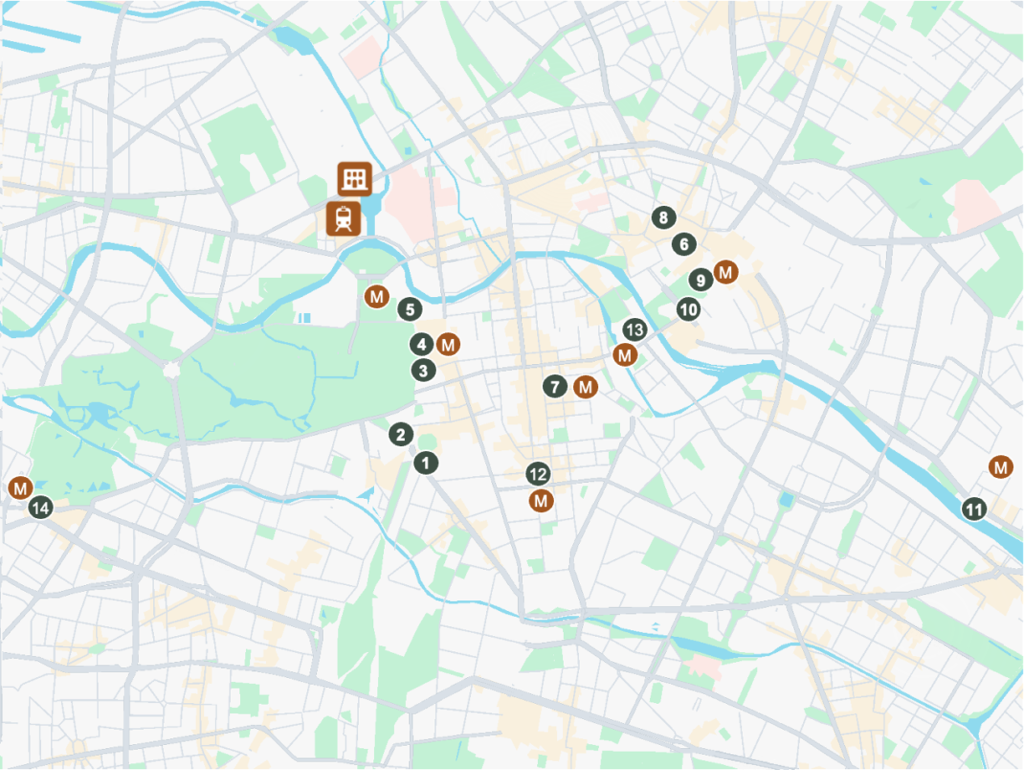
Day 1
- German Spy Museum – interactive museum featuring Cold War espionage
- Winterworld at Potsdamer Platz – seasonal festivities and city views
- Memorial to the Murdered Jews of Europe – powerful, contemplative Holocaust memorial
- Memorial to Homosexuals Persecuted Under Nazis – quiet tribute to persecuted LGBTQ+ lives in World War II
- Brandenburger Tor – iconic symbol of unity and history
- Reichstag Building – historic parliament building with glass dome
- Biermeisterei – hearty German fare and craft beer
- Christmas Market on Gendarmenmarkt – elegant market with festive atmosphere
Day 2
- Café Father Carpenter – cozy café with excellent brunch
- Berlin TV Tower – panoramic skyine views from above
- Berlin City Hall Christmas Market – traditional market beneath red brick town hall
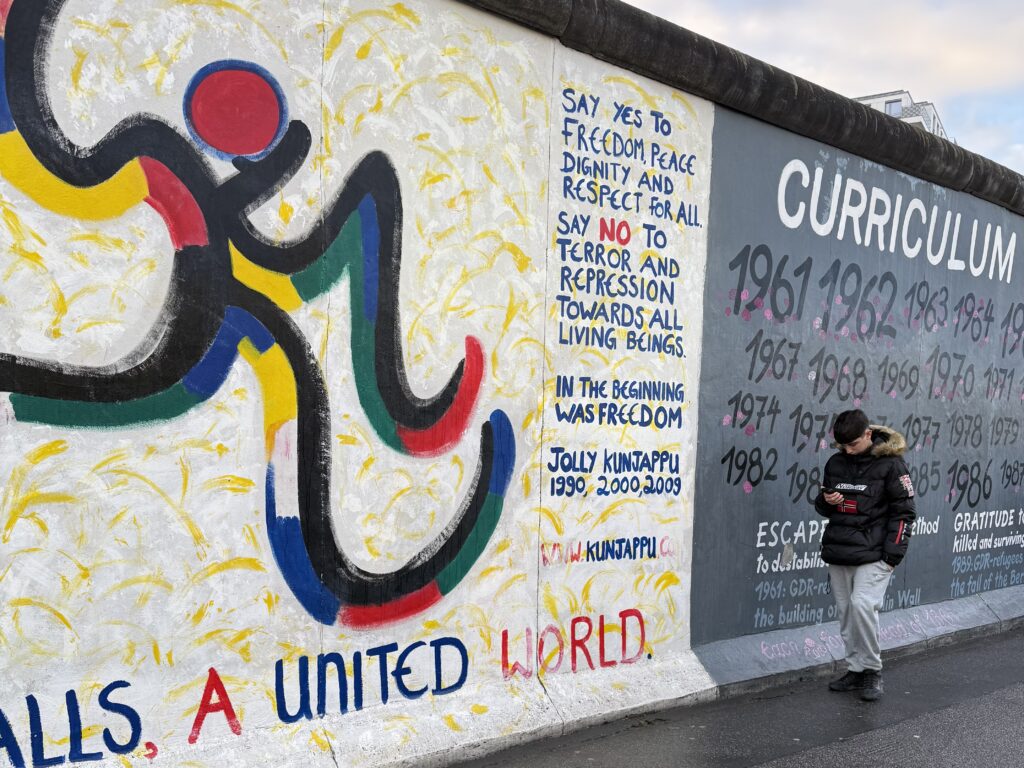
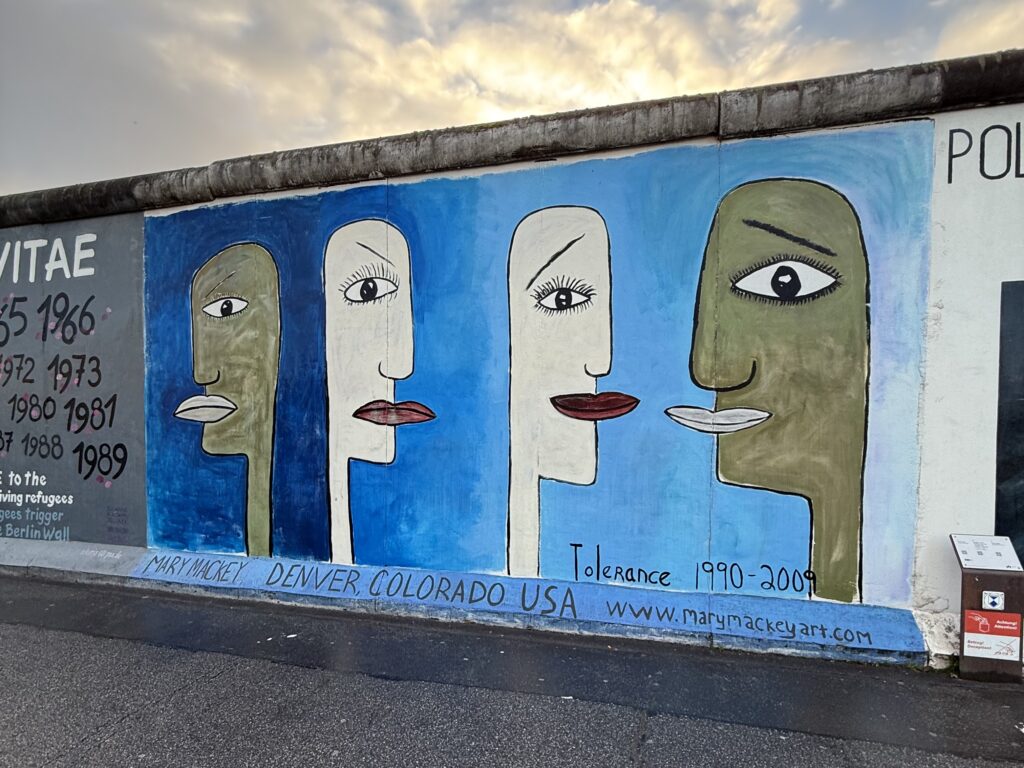
- East Side Gallery – murals and street art on original Berlin Wall
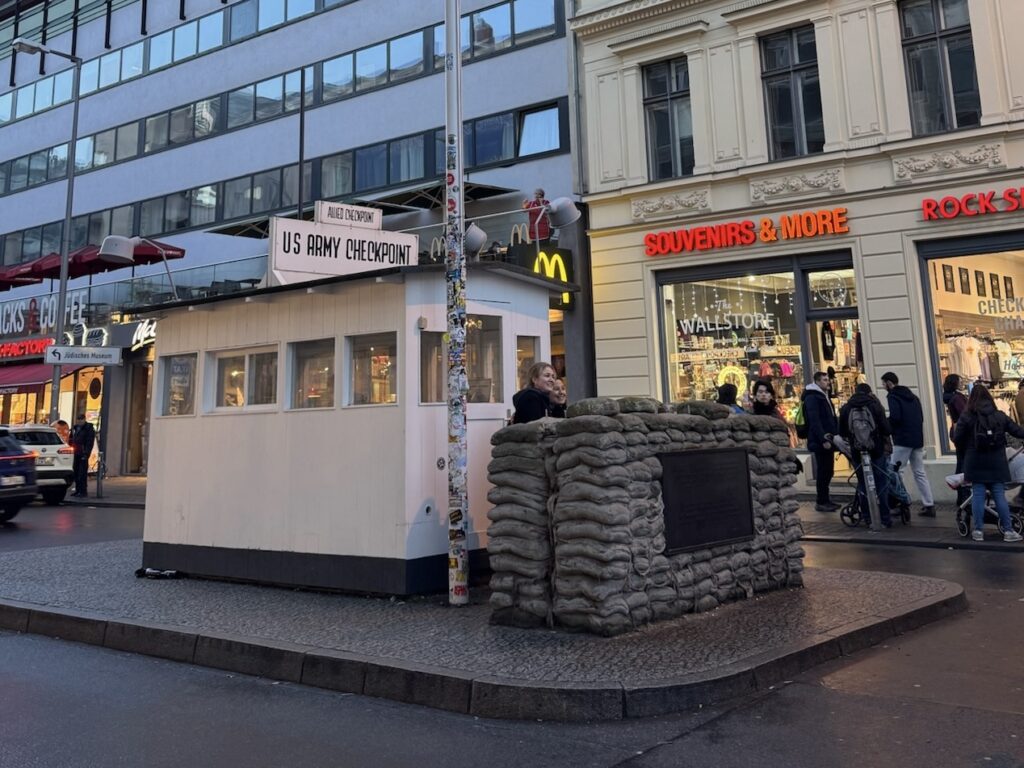
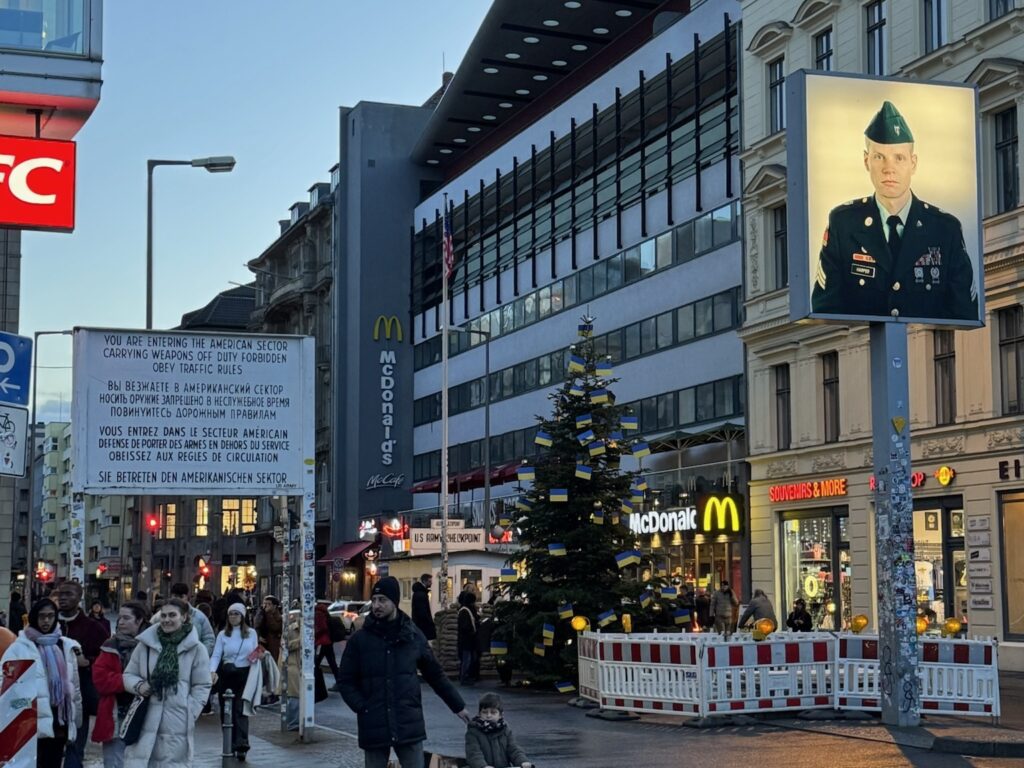
- Checkpoint Charlie – Cold War border crossing landmark
- Humboldt Forum Christmas Market – modern market in historic museum setting
- Christmas Market on Breitscheidplatz – lively market beside historic church
Day-by-Day Activities
Day 1
After ariving early on our overnight train from Amsterdam (read more about that experience in another post [link]), we stored our bags at the hotel and set out in search of breakfast. We took the U5 to Brandenburg Tor and then walked a few blocks to Backerei & Eiscafe for breakfast. It was a cute counter-serve spot where we got breakfast sandwiches and split a pastry along with much needed coffee.
Once fueled, we continued our walk towards the Germany Spy Museum. It was eerily empty on the streets before 10 AM and colder than we were mentally prepared for. We took the option to cut through the Mall of Berlin which was warm and protected from the wind and HUGE. Very reminiscent of the malls I frequented in high school.
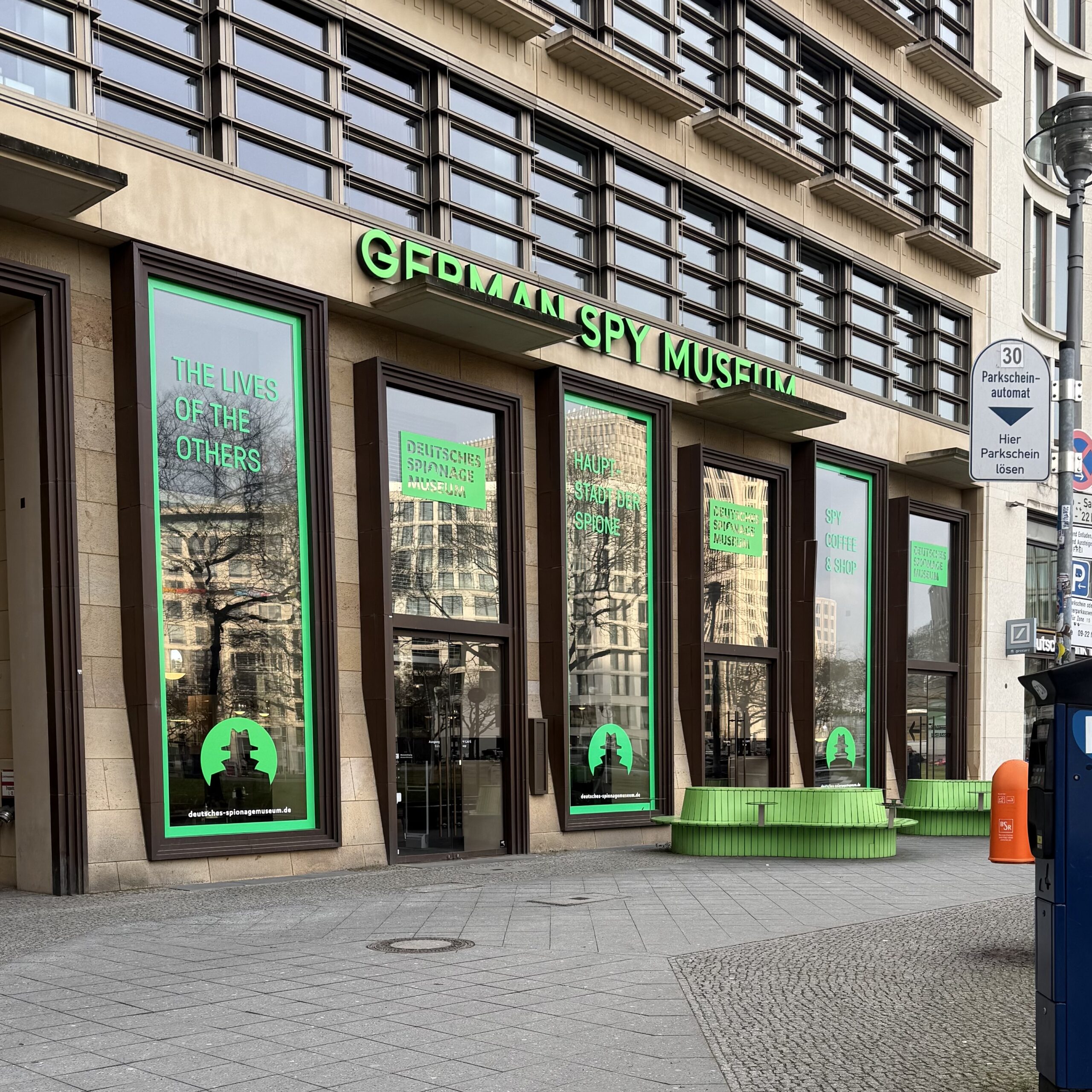
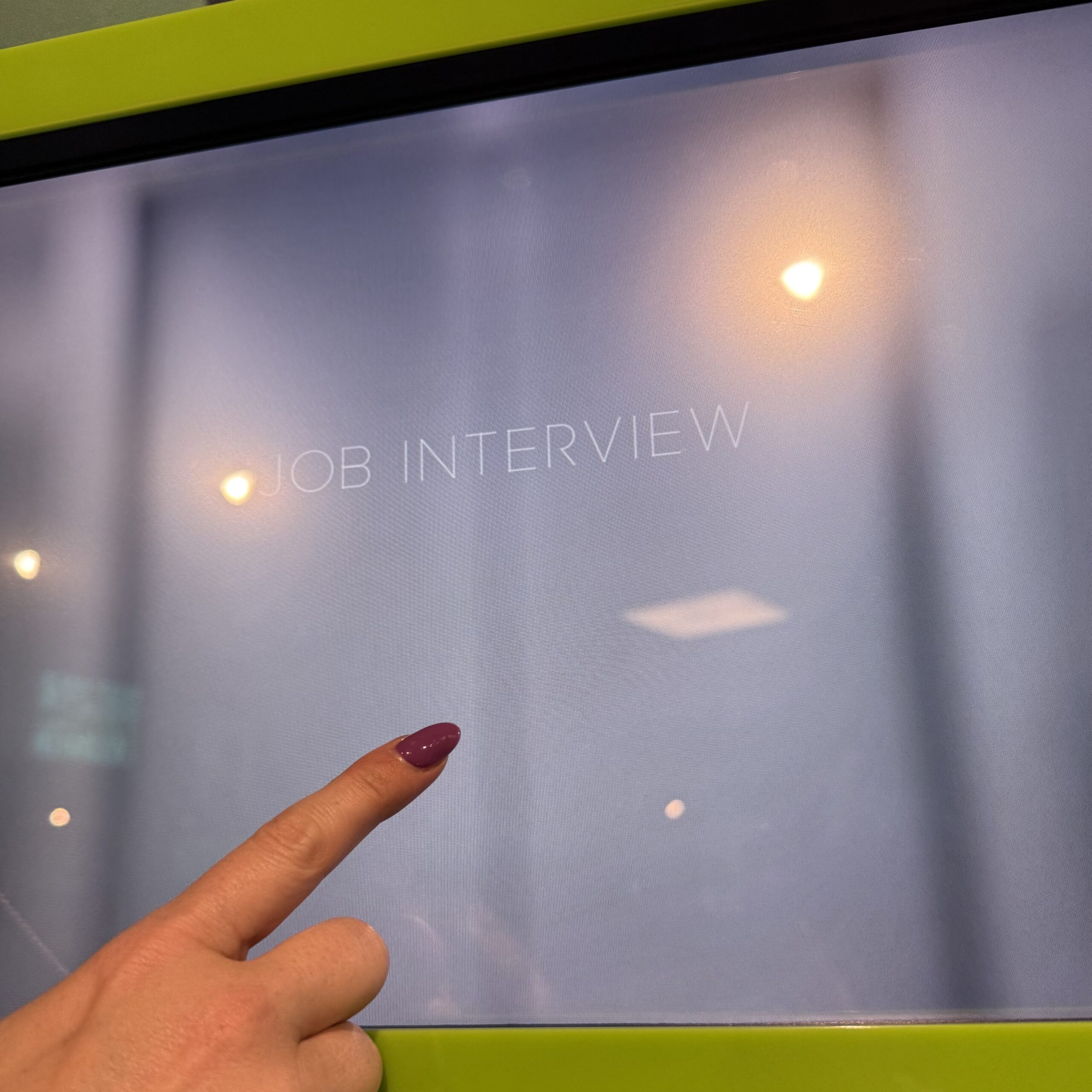
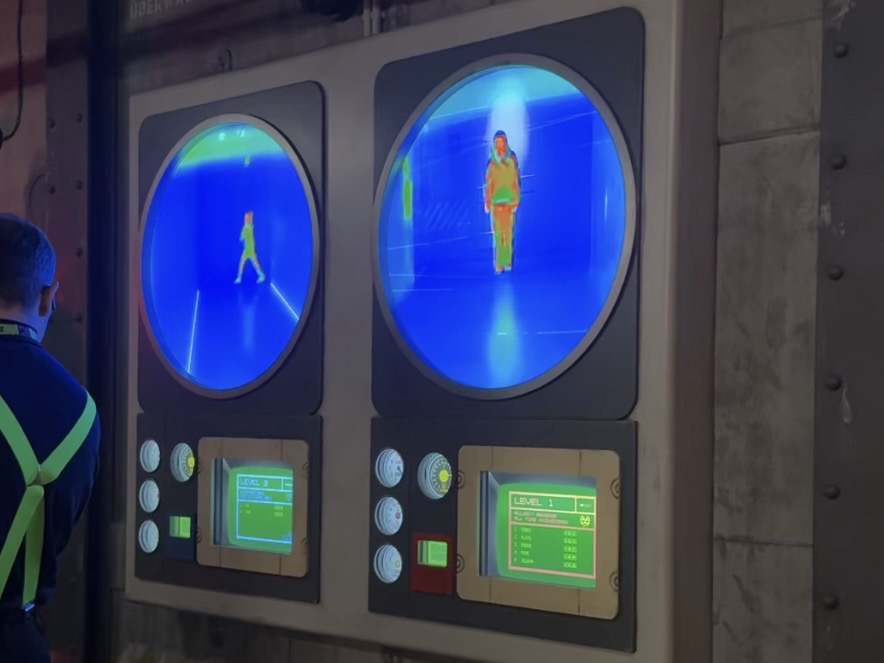
We got to the German Spy Museum just before opening and enjoyed being some of the first people in the museum – there were so many interactive exhibits that we didn’t need to wait to use. While many were tailored towards children, we enjoyed sweeping for bugs, solving puzzles, trying to step through a laser maze, and even completing an aptitude test to see if we were ready to be a spy!
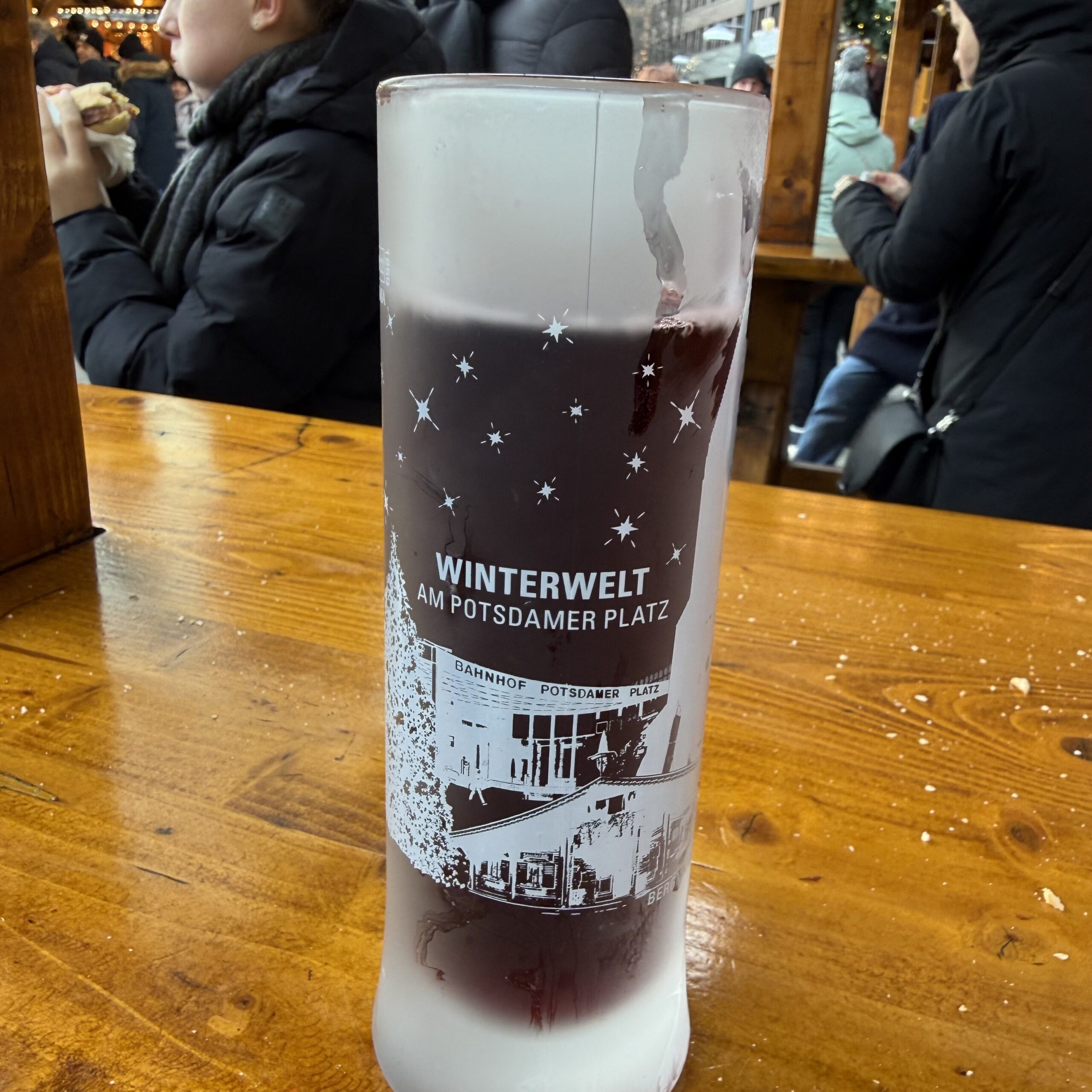
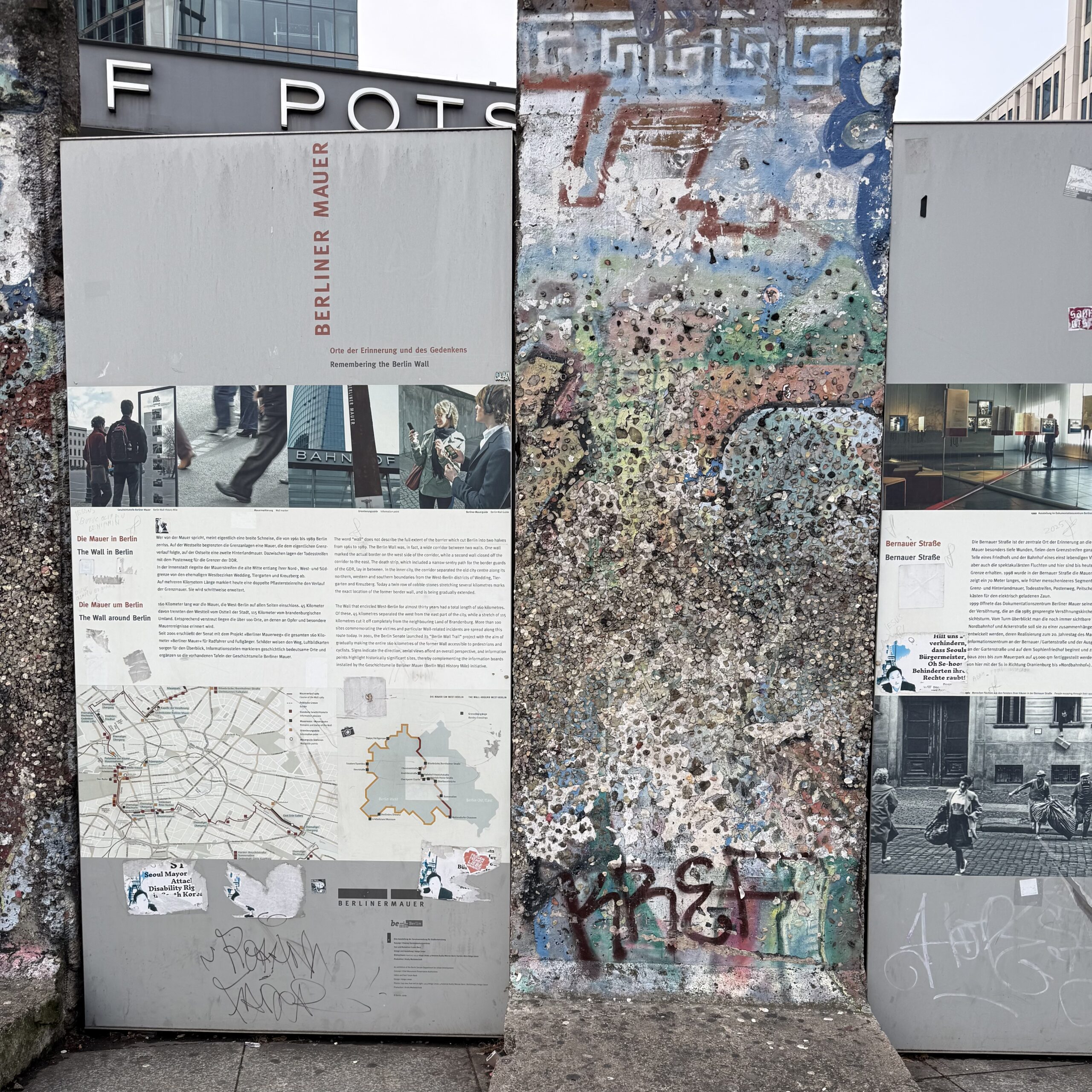
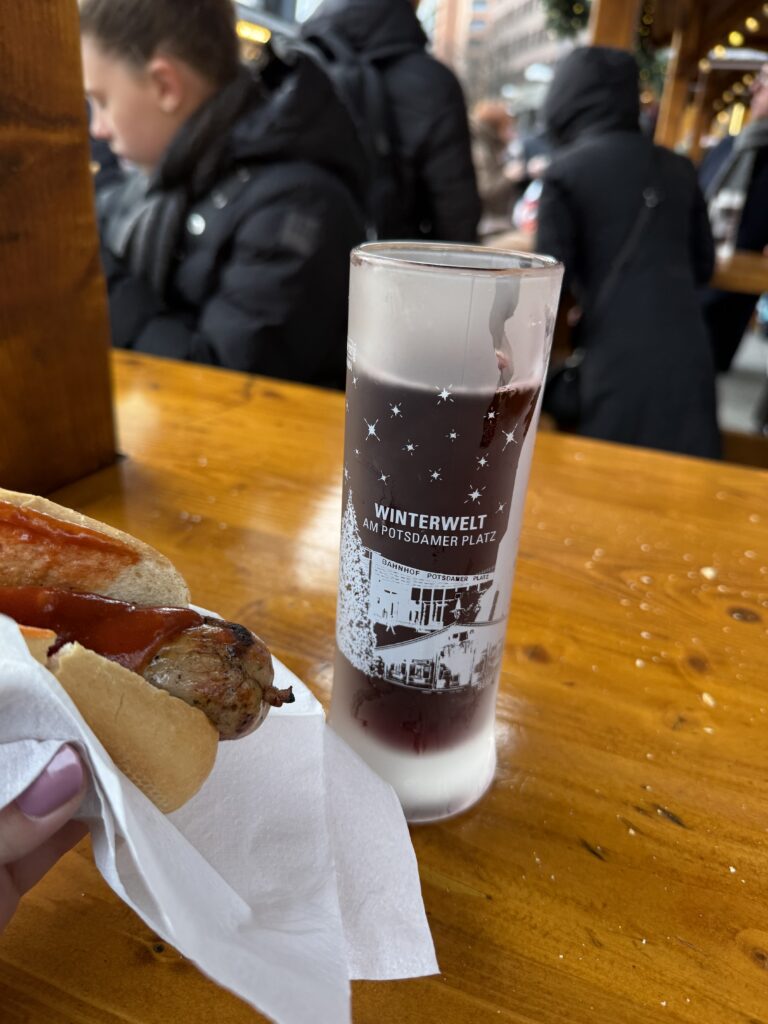
After the museum, we wandered into the middle of Winterworld at Potsdamer Platz, our first real Germany market of the trip. We started off with a glass of glühwein and enjoyed a few bites of food and wandering the shops. Across the street, we found a few Berlin Wall Remnants, a reminder of the how divided the city was during World War II.
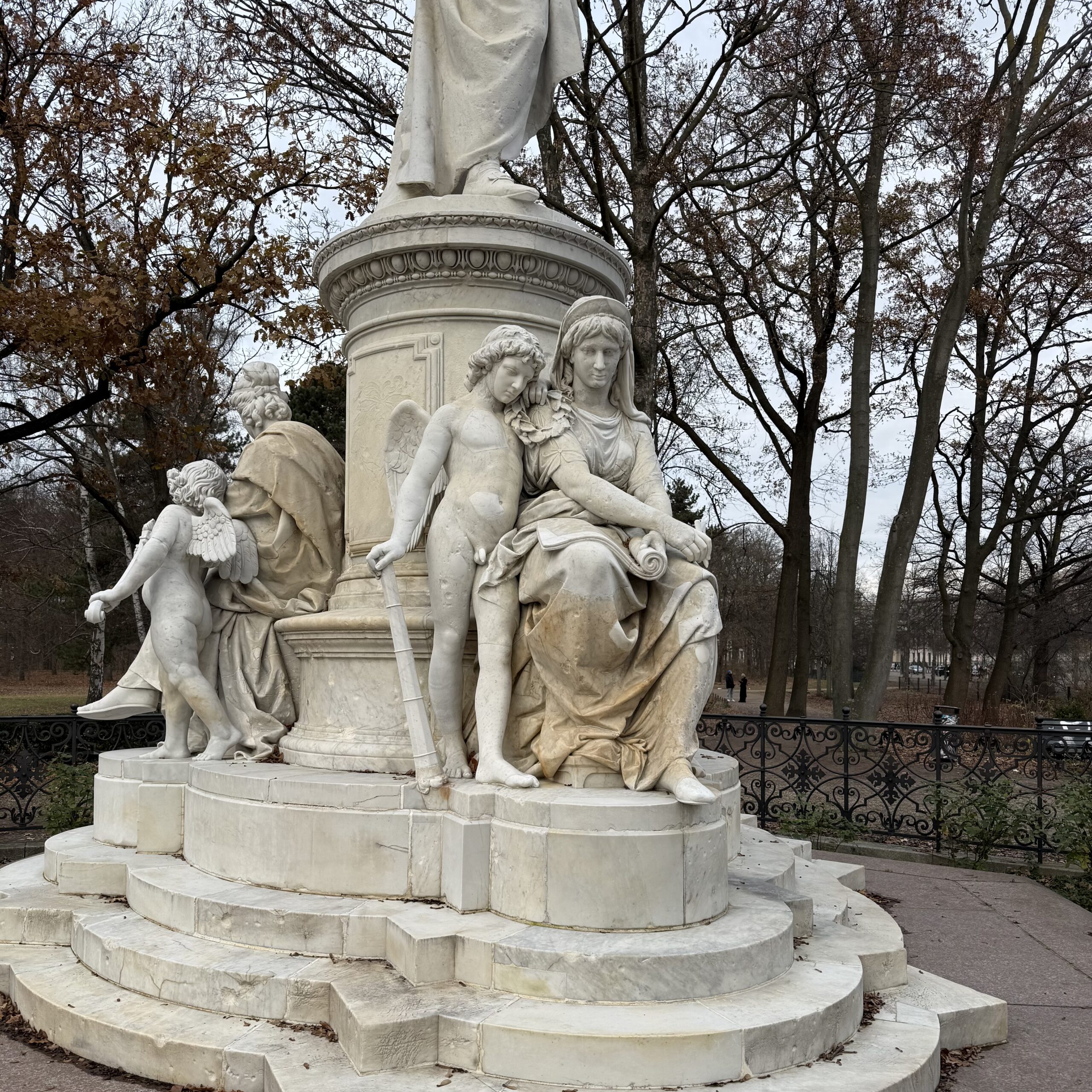
We walked up the street towards Tiergarten and the Memorial to the Murdered Jews of Europe. After spending time at the Anne Frank House in Amsterdam (read more about that in my Amsterdam post), we were interested to see how Berlin captured the weight of its own history. We wandered through the sprawling field of concrete slabs and felt a general sense of the scale and distortion of the piece. We did not make it to the information centre, although that might have rounded out some of the context we were looking for.
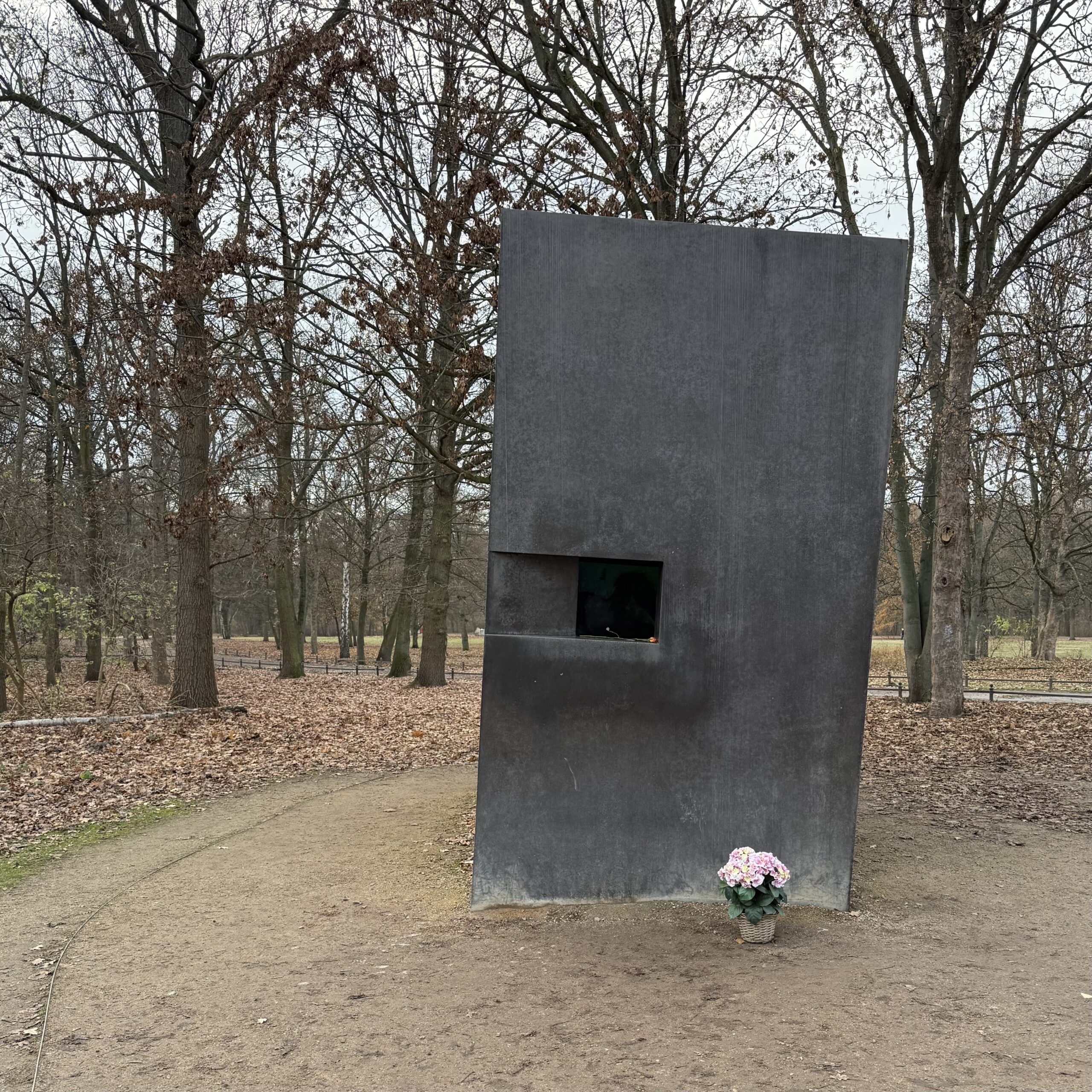
In our search about the significance of the monument, we also realized there was a nearby Memorial to Homosexuals Persecuted Under Nazism. So we walked across the street into the edge of Tiergarten to visit it. After passing a large sculpture in the mark, we found the much smaller memorial. We found the media display inside the block interesting and did appreciate how the monument both fit in with the overall feeling of the larger memorial while serving a unique purpose.
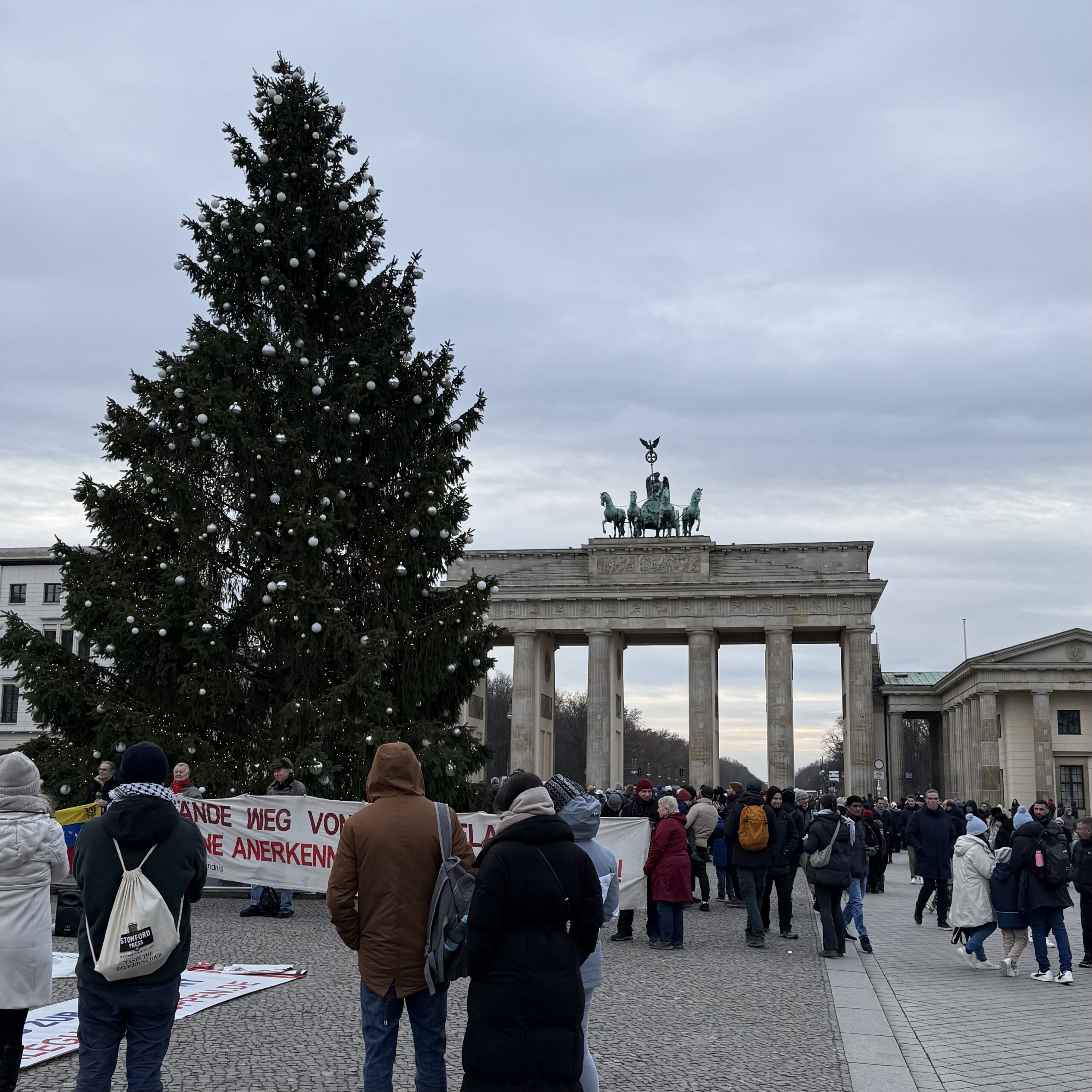
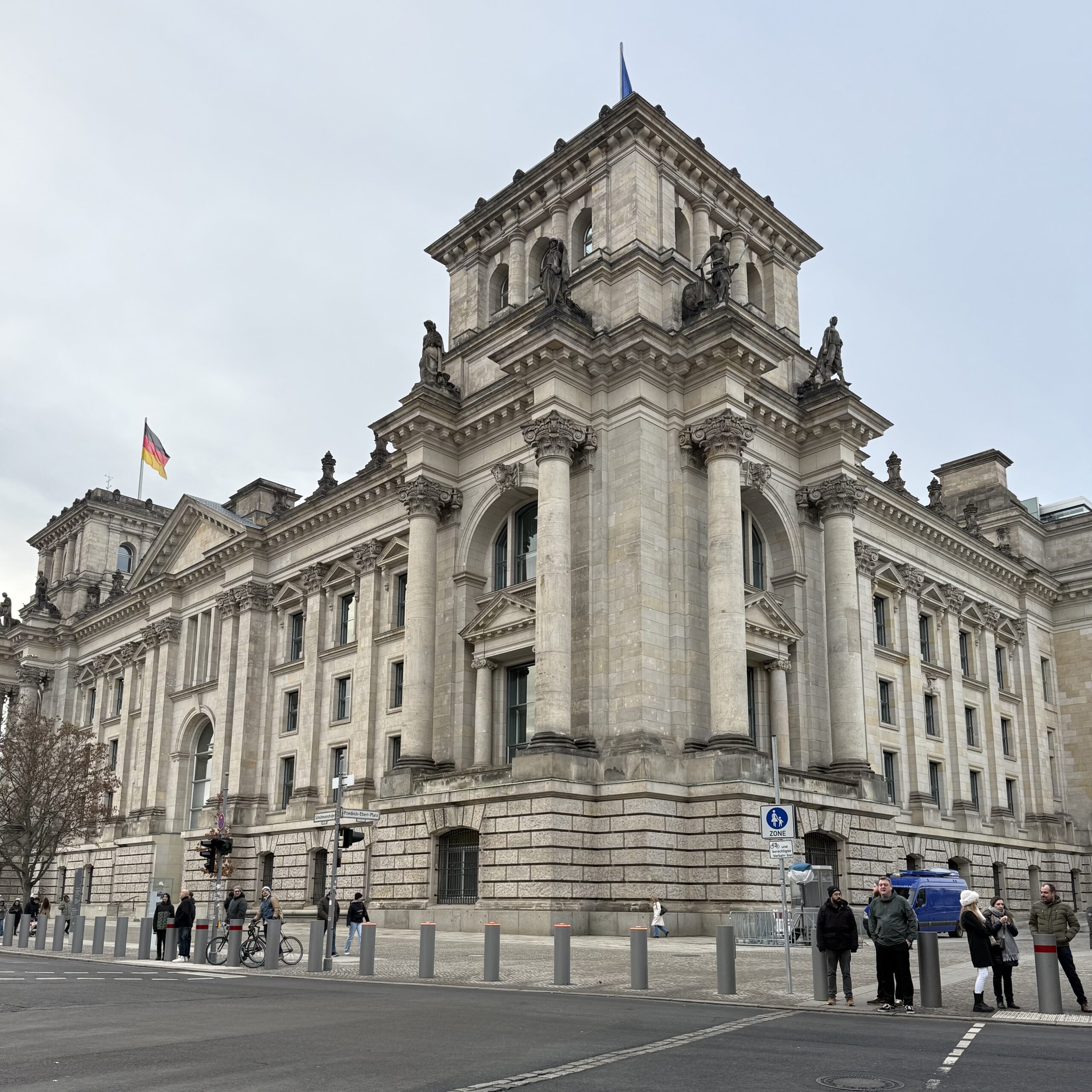
We then continued up the street to find the Brandenburger Tor, its plaza now full of people instead of empty as it was earlier. Once obstructed by the Berlin Wall, today the gate is a symbol of European unity and peace. After admiring its scale and appreciating the Christmas tree adorning the plaza, we walked a little further to the Reichstag Building. This massive building houses Germany’s parliament and is often known for the large glass dome at its top. To visit the dome, you need to either book a tour or register beforehand. We had done neither, so we just admired the building from the outside before finding the nearby Bundestag station to hop back on the U5 to our hotel.
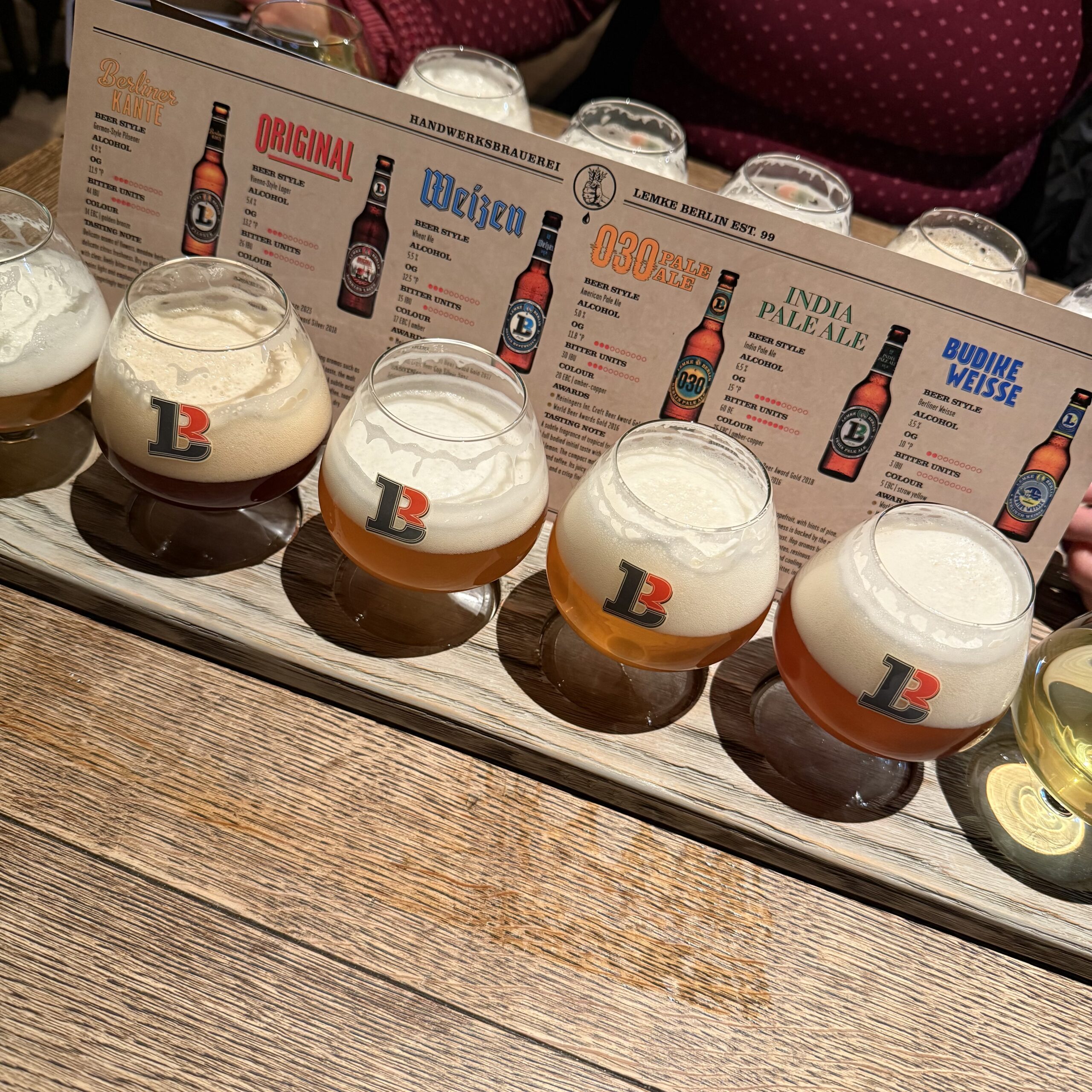
After a much-needed power nap, we headed out to find dinner. Without a reservation on a Saturday night, it proved challenging to find a place to a eat. We tried a few well reviewed places in the Mitte neighborhood and finally had success at Biermeisterei. The food wasn’t the traditional German fare we were hoping for, but we got a beer flight and enjoyed a meal inside, seated, and warm.
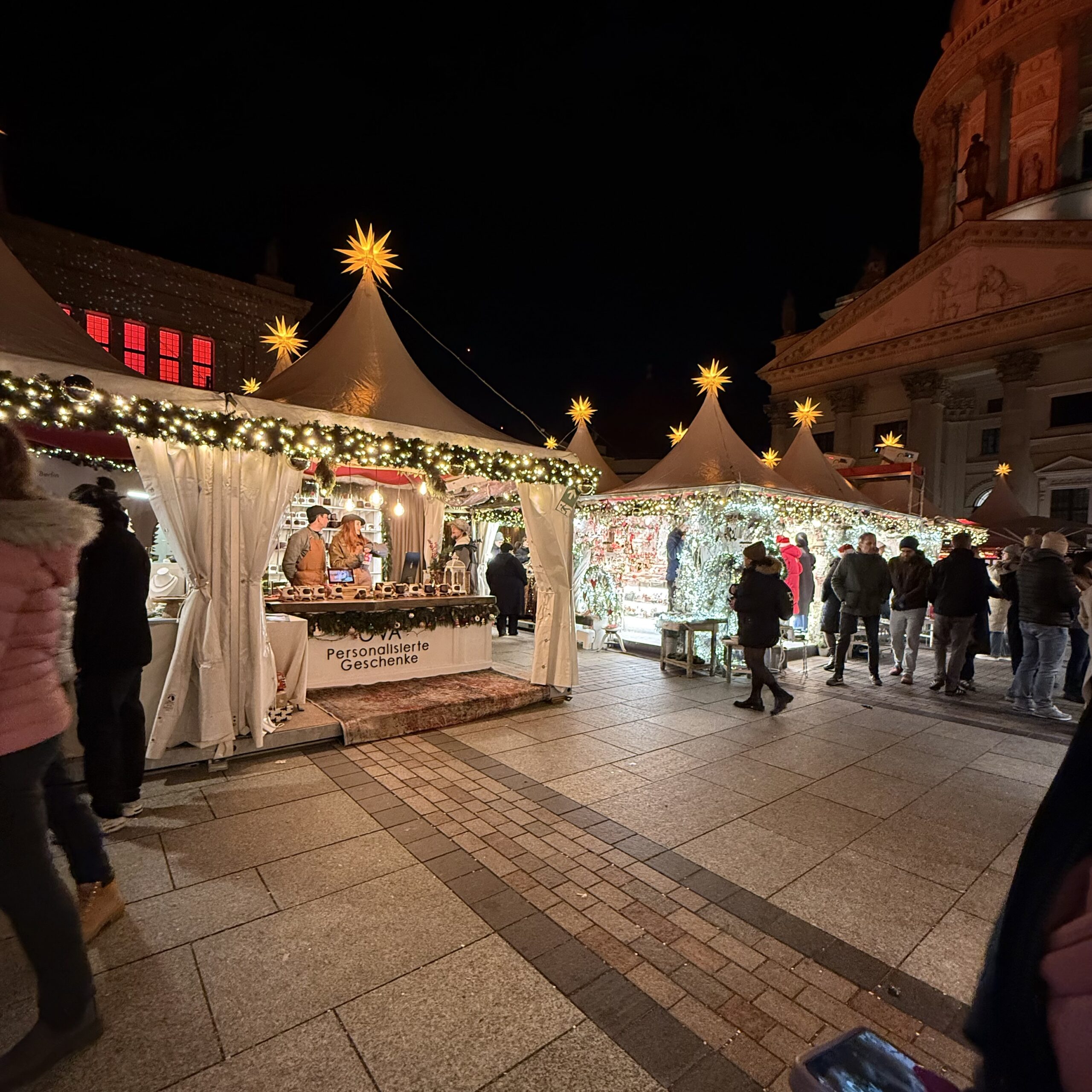
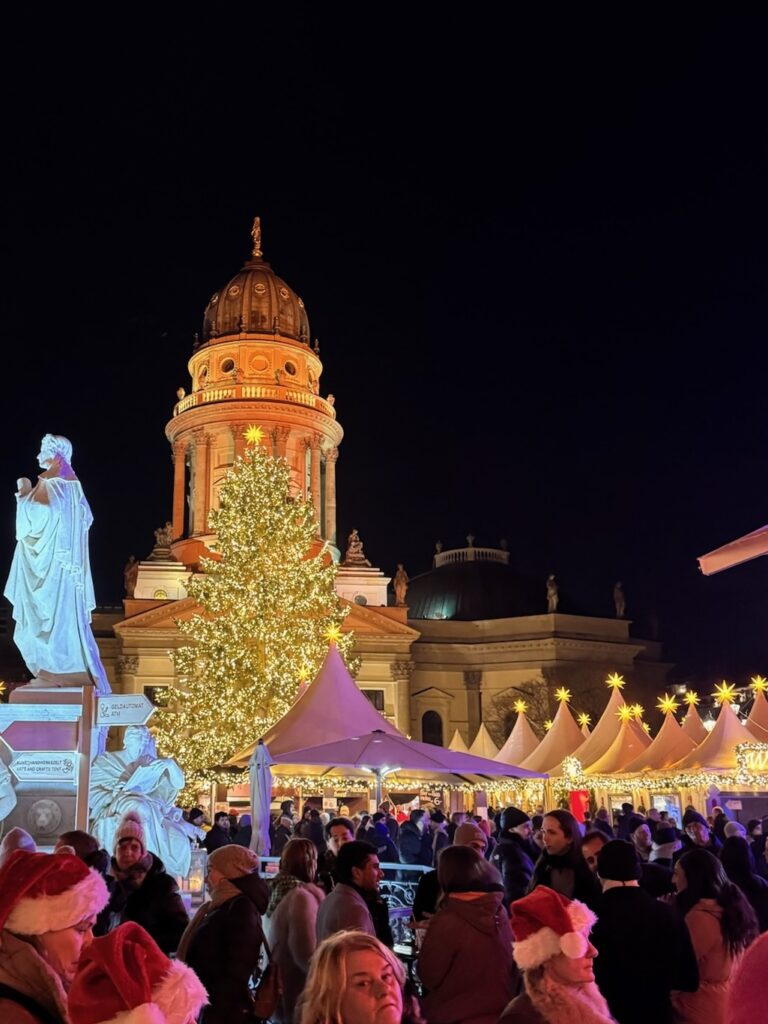
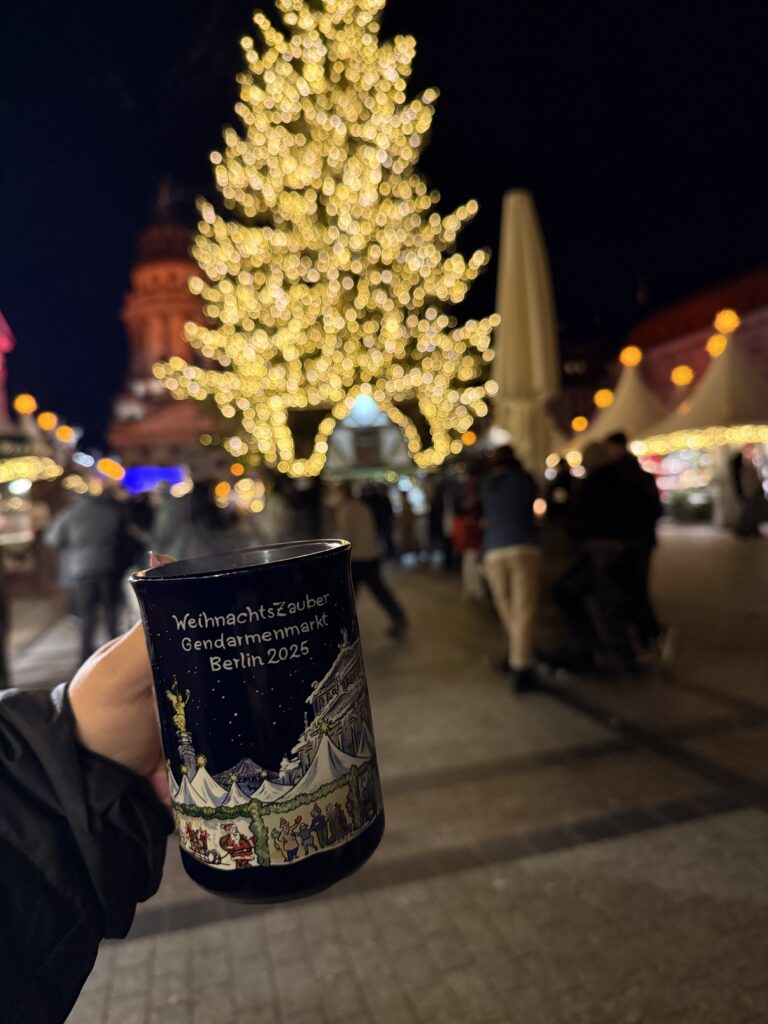
After dinner, we found one of the few markets open late and hopped on the U2 to the Hausvogteiplatz station. The Christmas Market on Gendarmenmarkt required a small entry fee but was so worth it to see a beautiful market in a historic plaza. After some glühwein (you might be sensing a theme) and strolling through the market, vendors started to pack up and we decided to head out.
Full of beer, glühwein, and Christmas cheer, we called Day 1 in Berlin a success.
Day 2
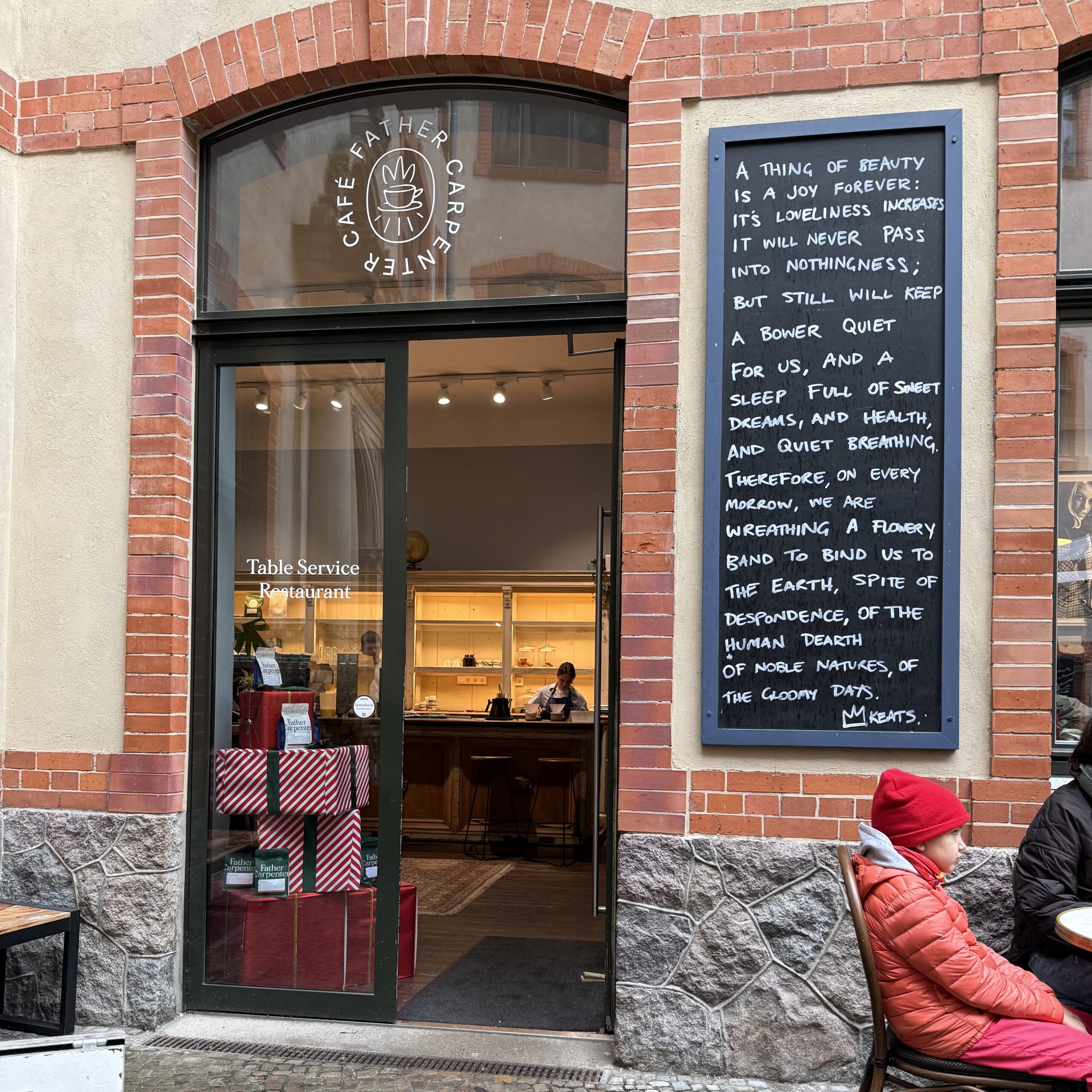
After taking advantage of one of the few mornings to sleep in the entire trip, we headed out to well a reviewed brunch spot in Mitte. Café Father Carpenter was in a charming courtyard and its food did not dissapoint and we enjoyed our coffee and diverse brunch food.
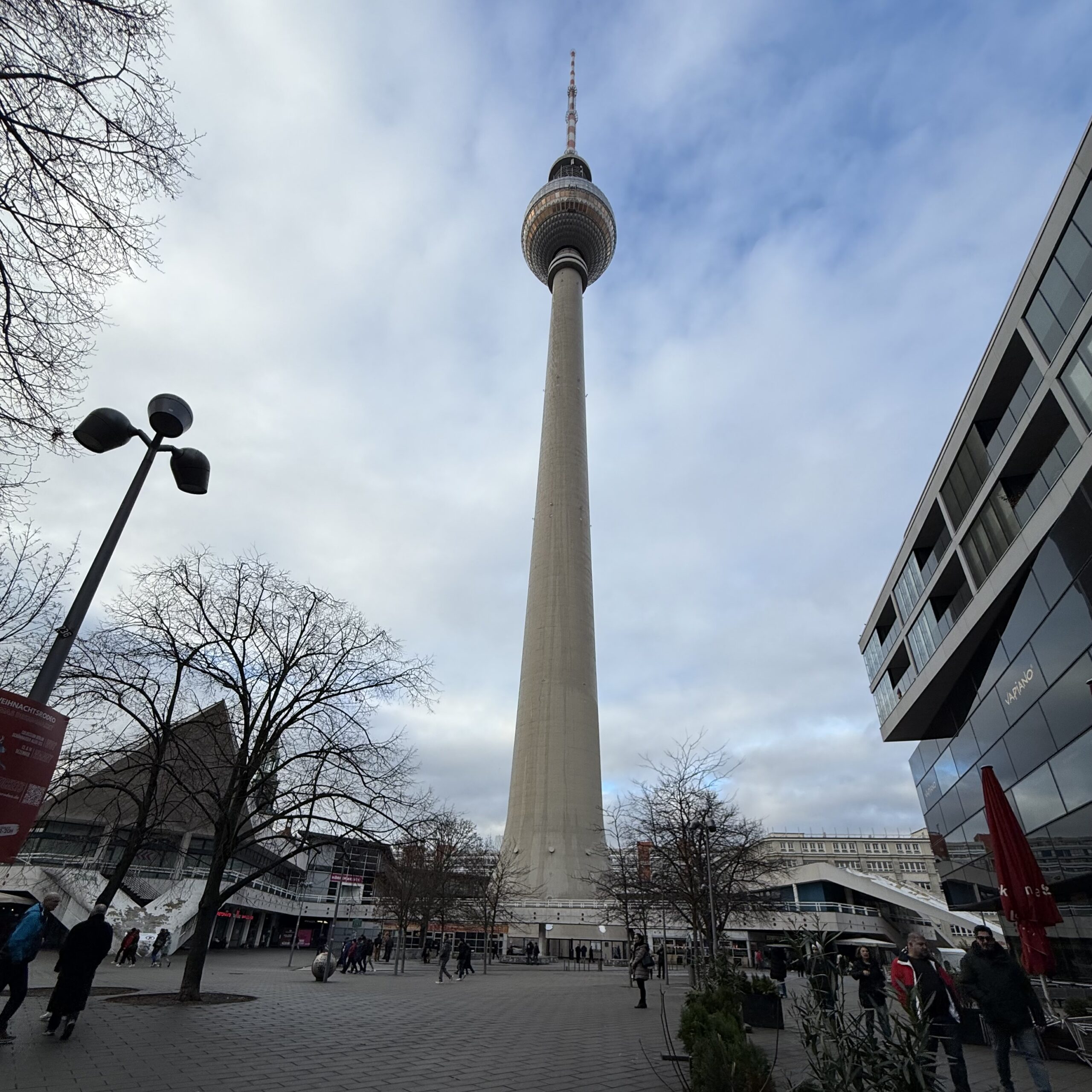
After brunch, we walked over to see Alexanderplatz and the TV Tower. There was a large Christmas Market at Alexanderplatz that we didn’t spend much time going through – after a large brunch we were neither hungry nor ready to start drinking glühwein (although if their mugs had impressed me, I would have 100% gotten some). We also admired the TV Tower from the outside but decided not to spend the time going up to see the view from the top.
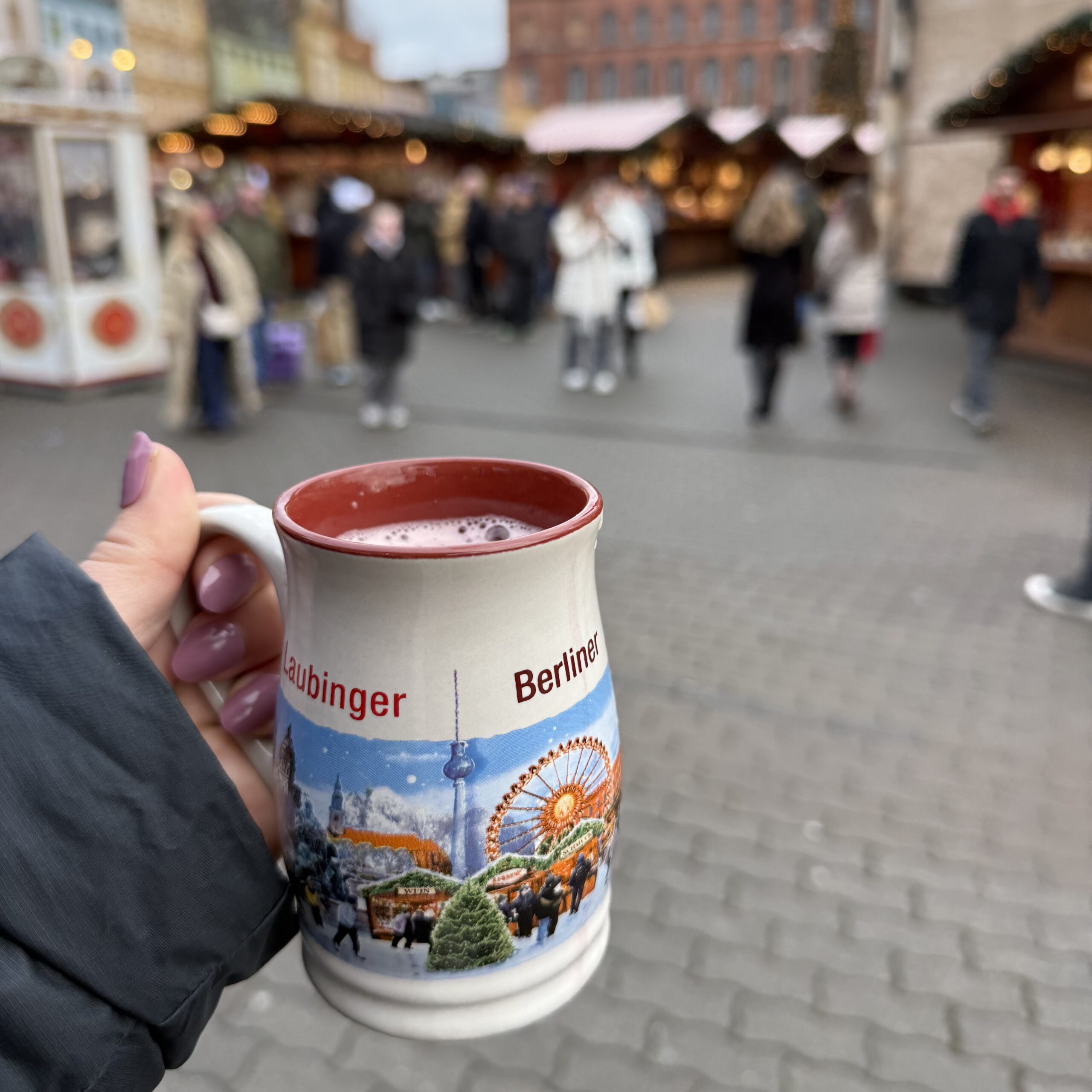
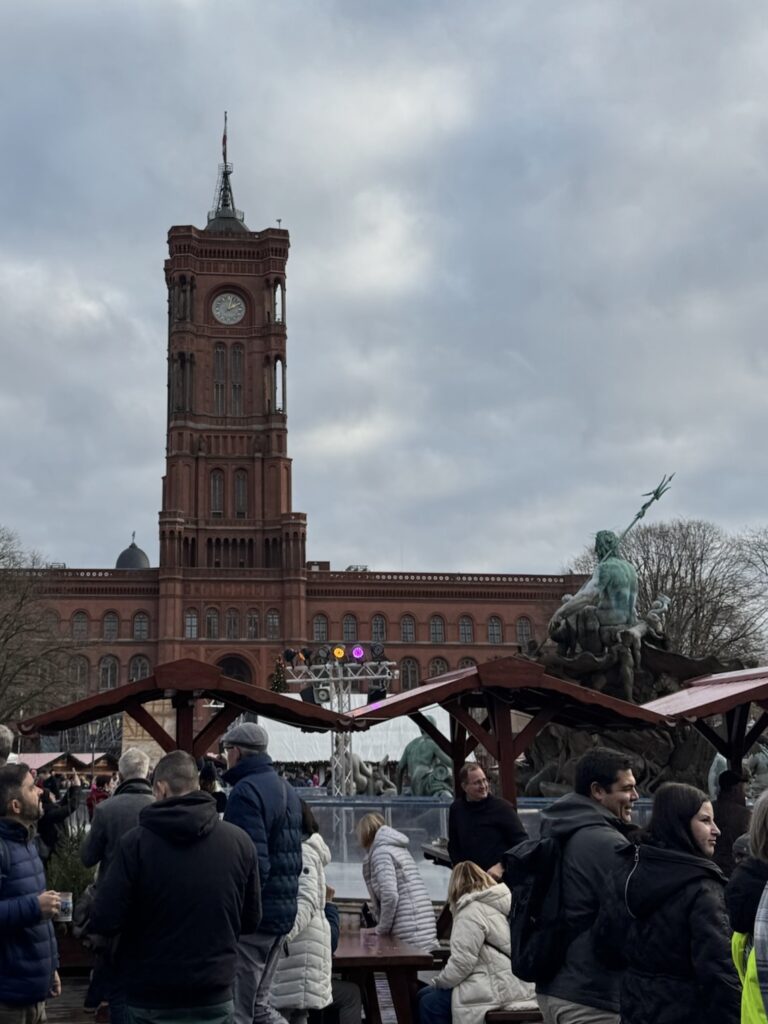
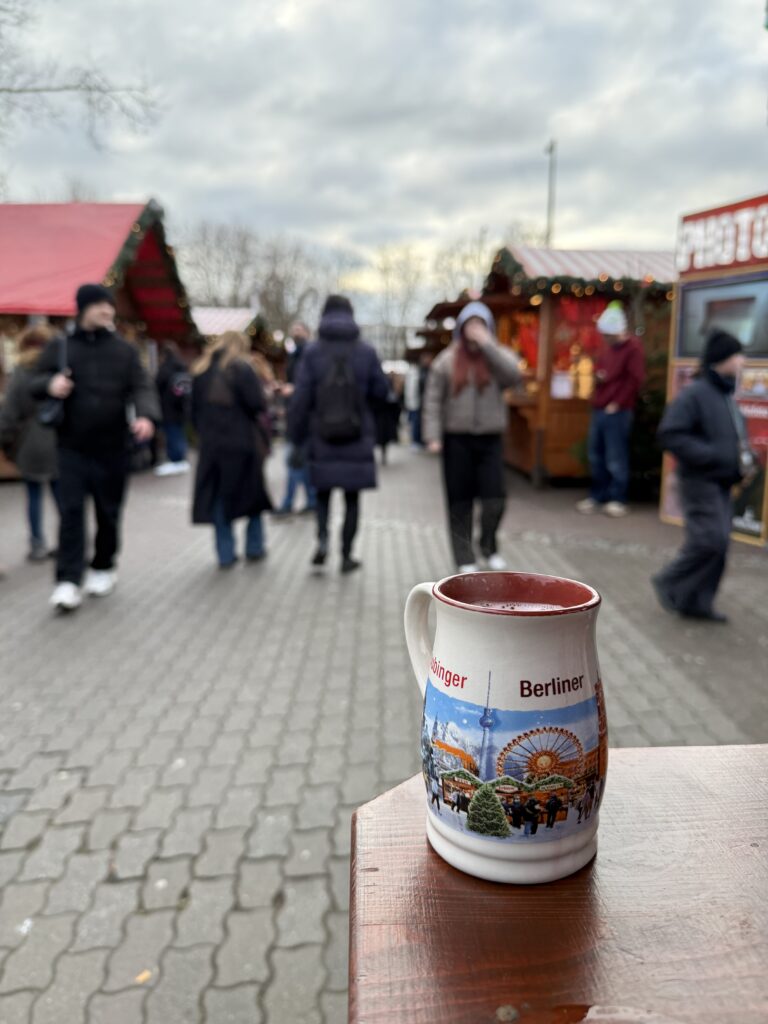
On the other side of the TV Tower, we found Berlin City Hall Christmas Market. This was a large market in front of the red city hall and I decided it was time for my first cup of glühwein and a photo of the unique mug. We walked a lap around the market and admired the ice rink in the center surrounding Neptune Fountain.
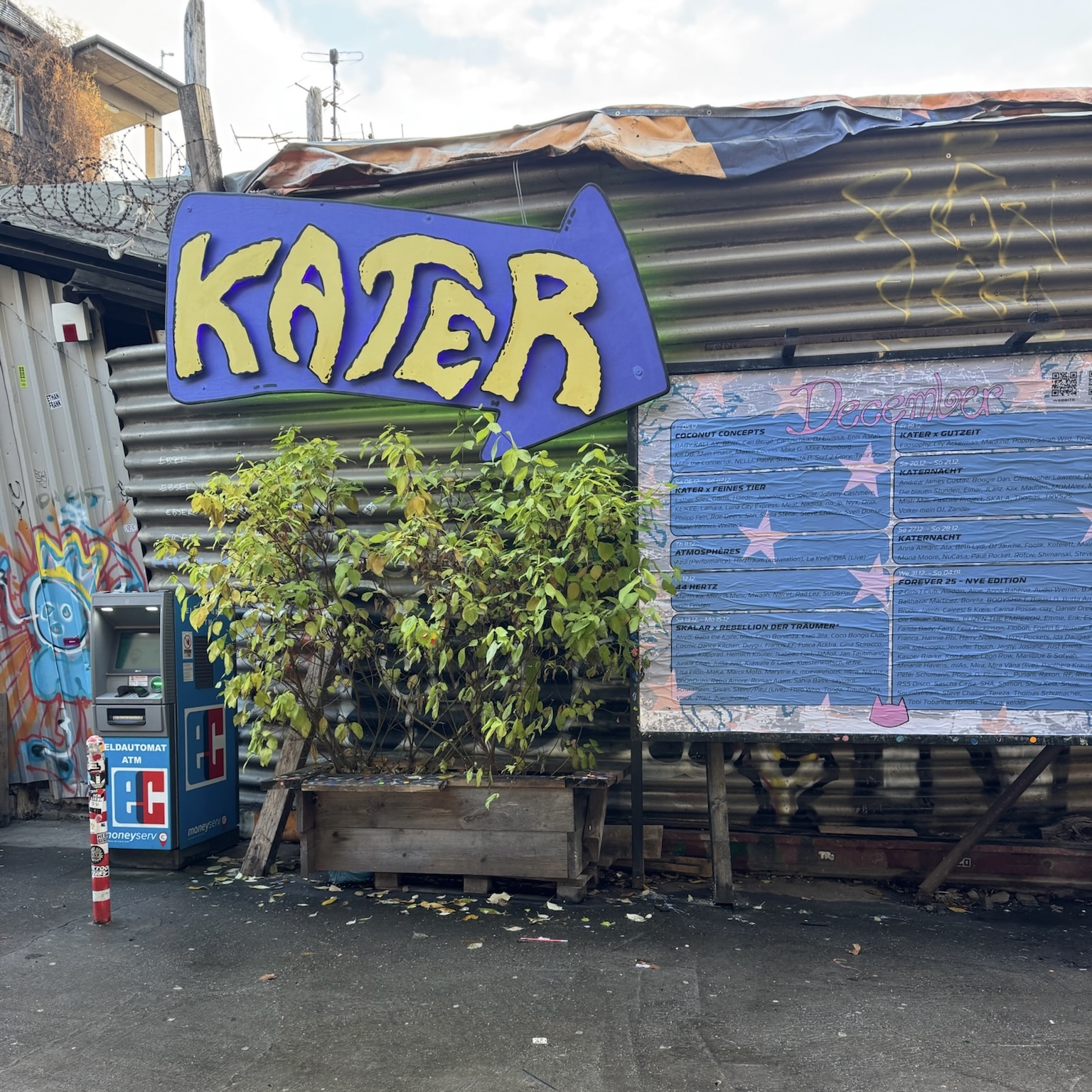
Ready to continue with the day adventure, we went back to Alexanderplatz station and took one of the many S-Bahns to Ostbahnhof station. This is the closest station to the east side gallery, but first we wandered in the opposite direction to check another item off the Berlin bucket list. Originally, the plan was to go to one of Berlin’s many nightclubs on Saturday night but due to long nights, lack of energy, and hesitation battling the cold, we settled on a day trip to Kater Sunday. The club was open and there were people entering, but we felt a little too old and underdressed to venture in.
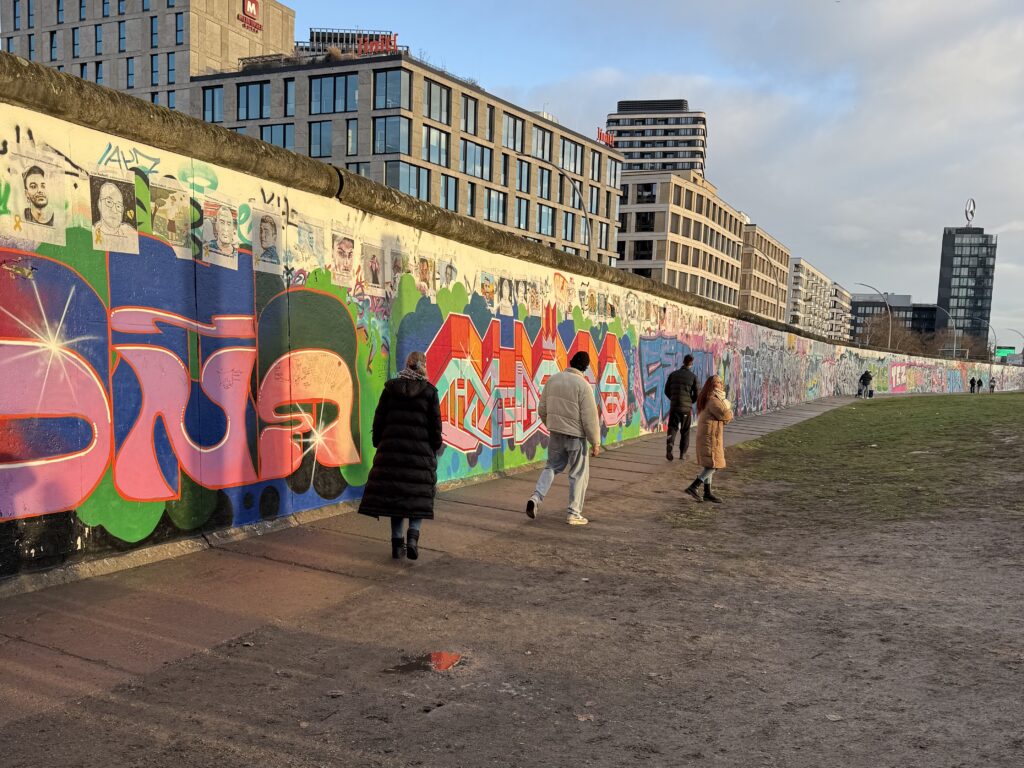
I read so many great things about East Side Gallery and knew that we needed to check it out. It’s the longest stretch of original Berlin wall and has been covered in art by artists around the world. We enjoyed walking along the stretch of the wall and reflecting on the symbolic messages of unity and hope.
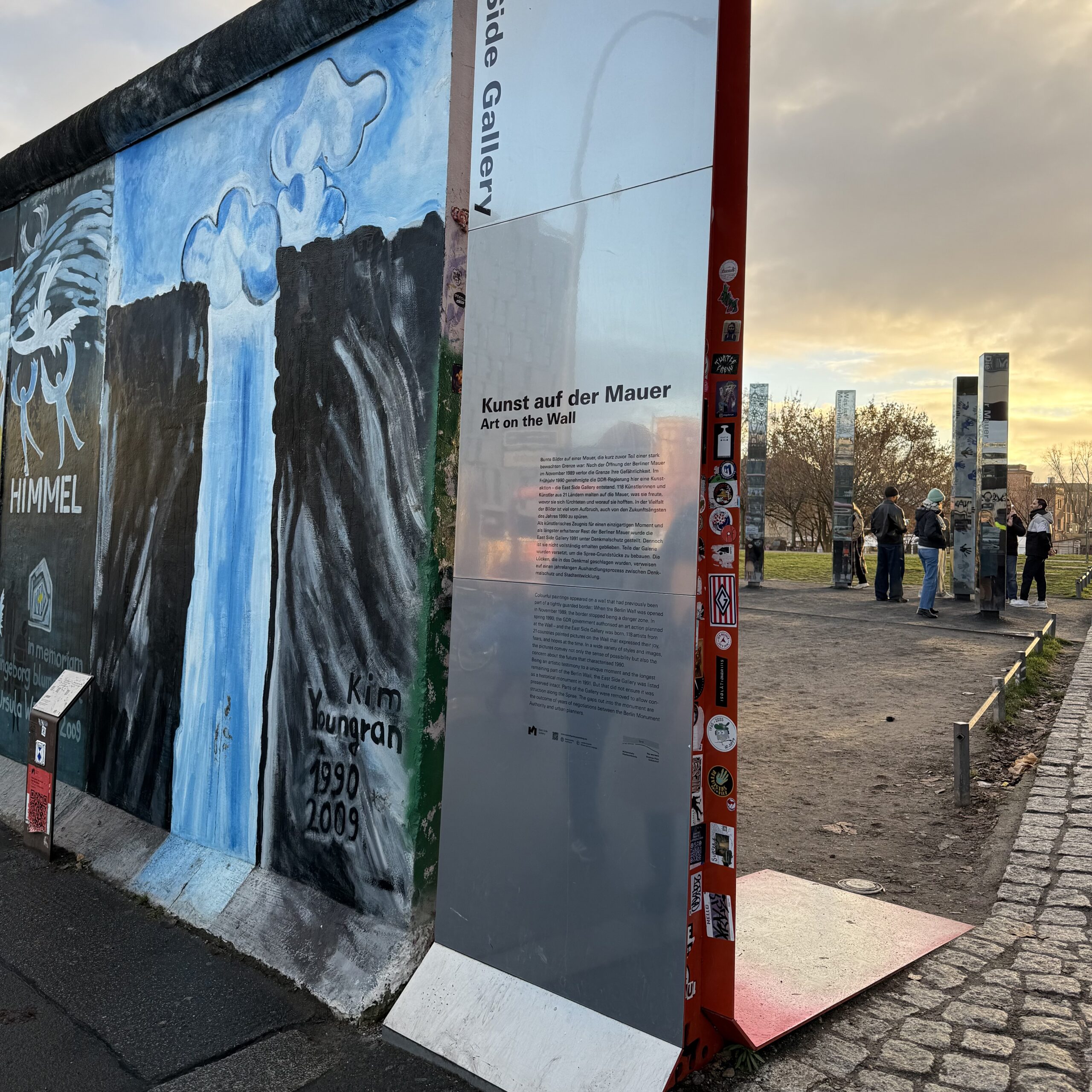
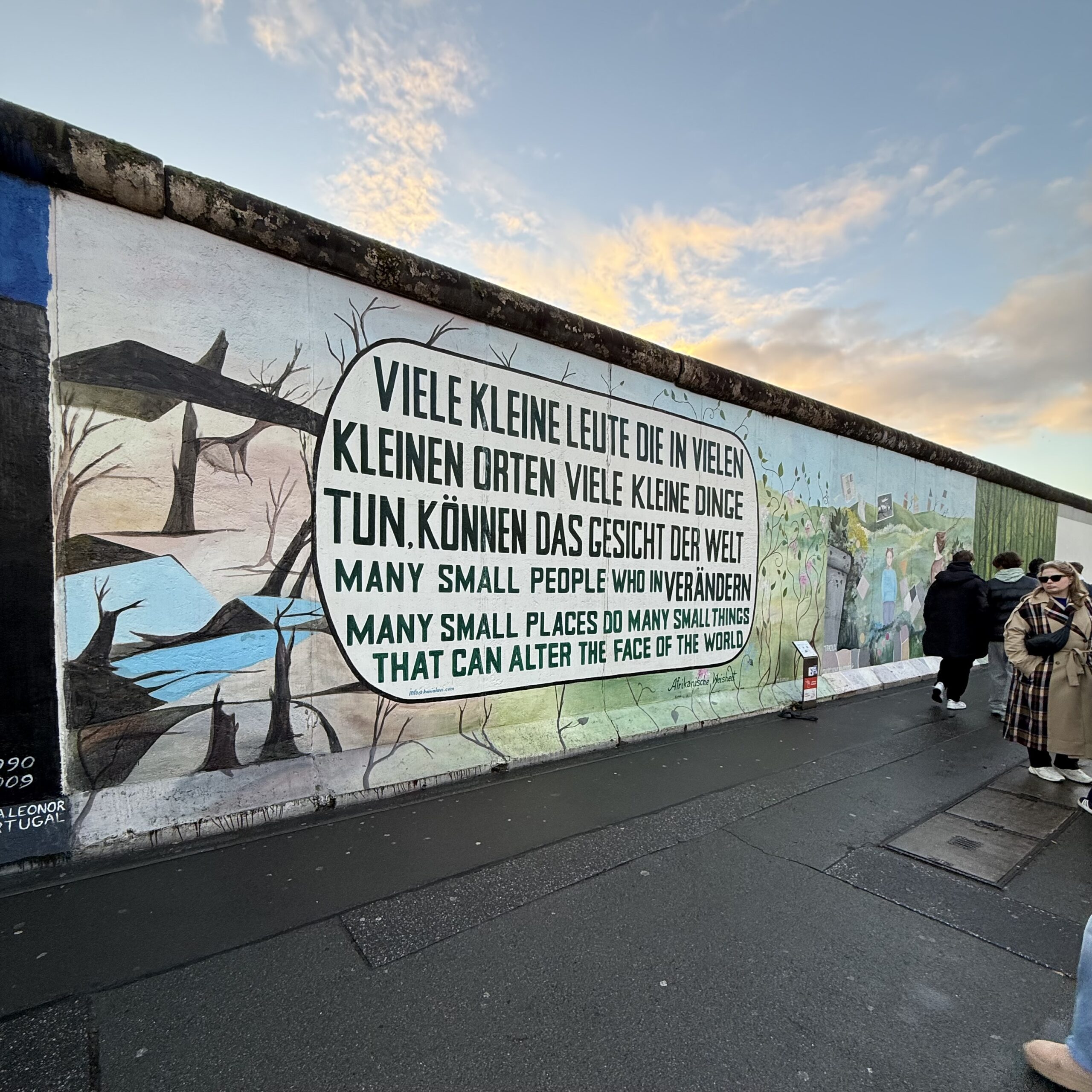
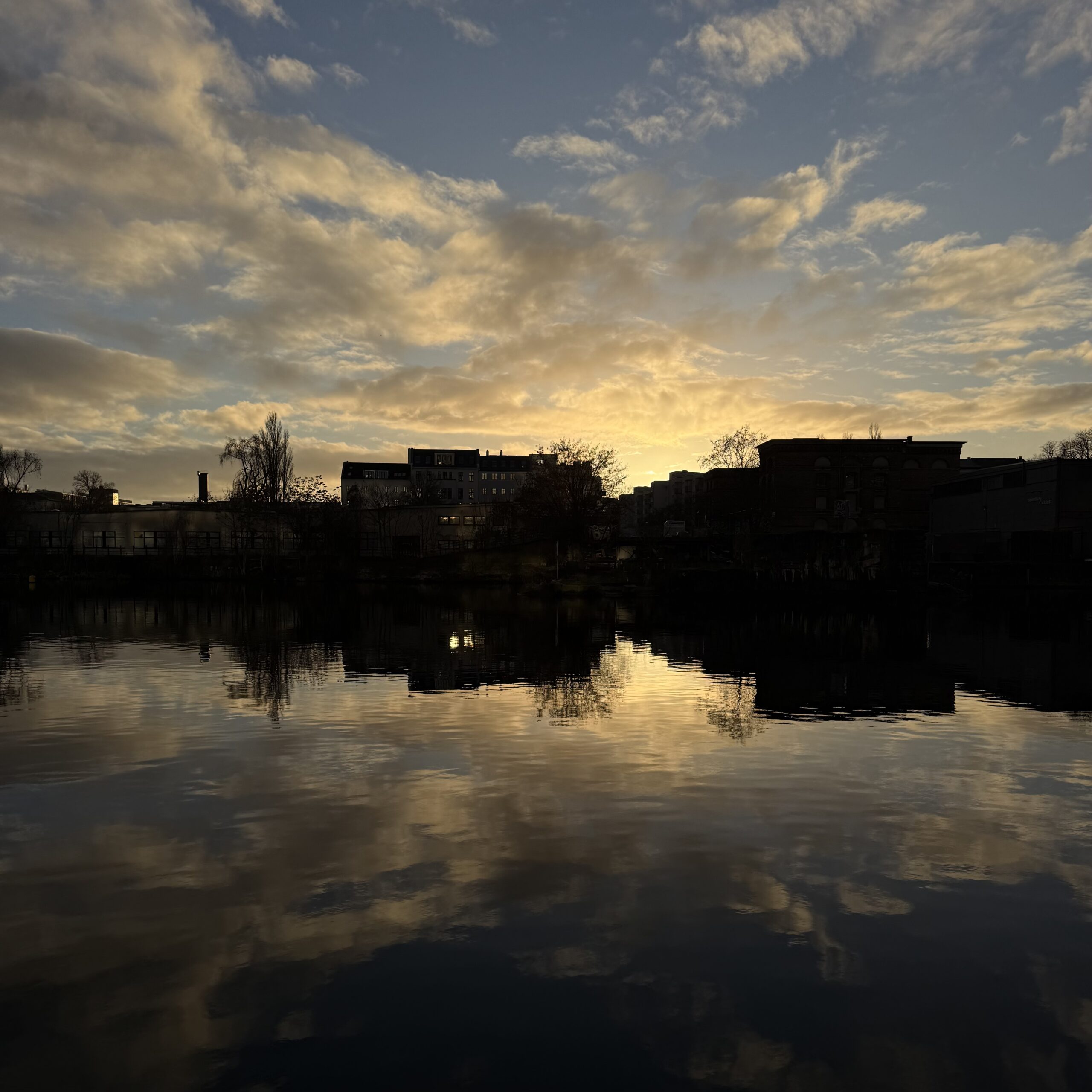
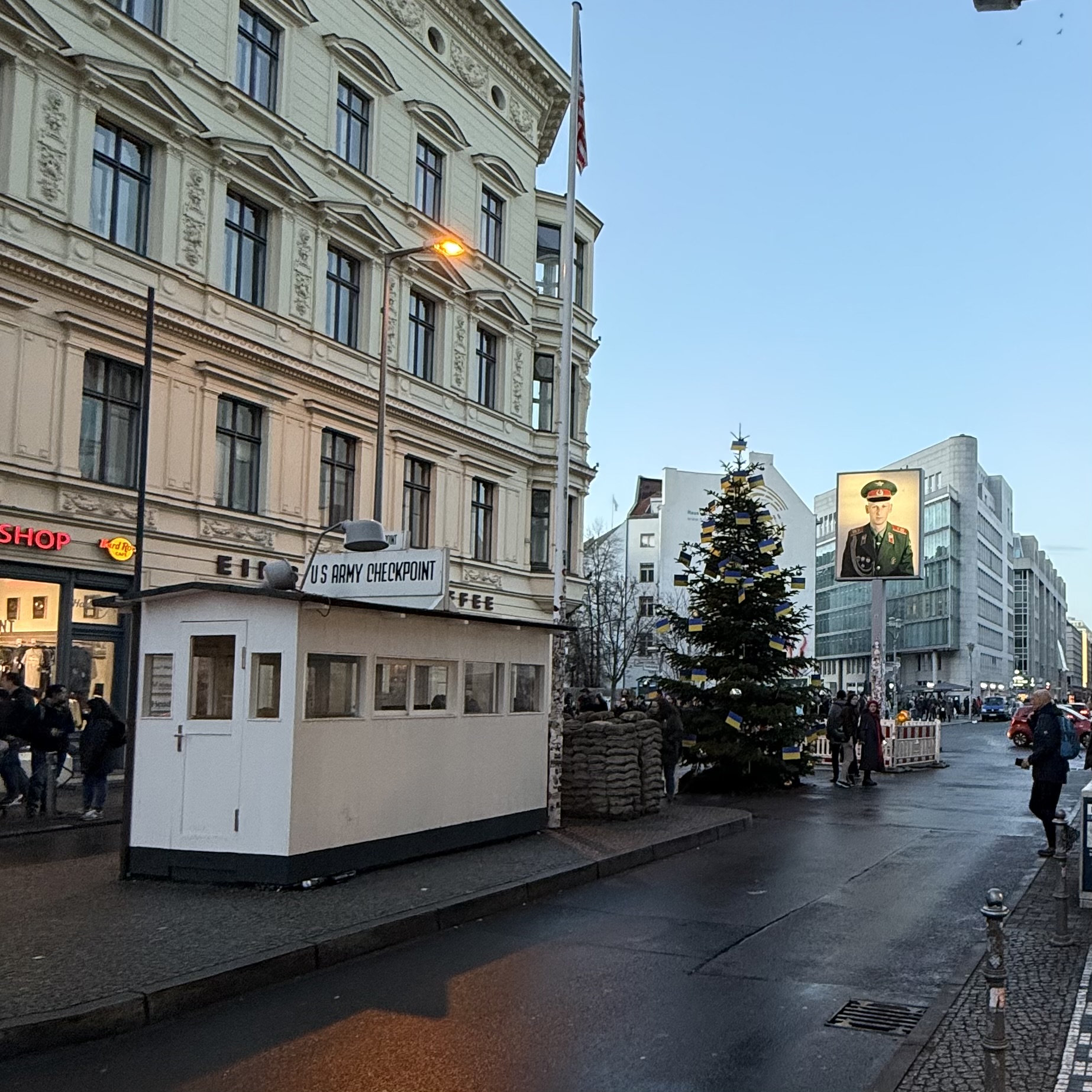
As we were leaving East Side Gallery, we caught the beginning of a gorgeous sunset from across the Spree. We then walked across the Oberbaumbrucke Bridge – one of the pedestrian crossings during the Cold War. On the other side, we hopped on the U3 and trasfered to the U6 to get off at the Kochstraße station near Checkpoint Charlie. A quick walk up the street got us to Checkpoint Charlie where we could see the original gate, welcome and exit signs, as well as a block containing outdoor historical information about the Cold War. After spending some time reading as the sun set, we headed towards Museum Island to see the Humboldt Forum Christmas Market.
We got back on the U6 and took that to the U5 to Museum Island. As it was after 5 PM, nearly every museum was closed or closing and there were a disappointing amount of night light adorning them. The Humboldt Forum Christmas Market was impossible to miss and we enjoyed wandering around, getting an obligatory glühwein and sharing some market snacks.
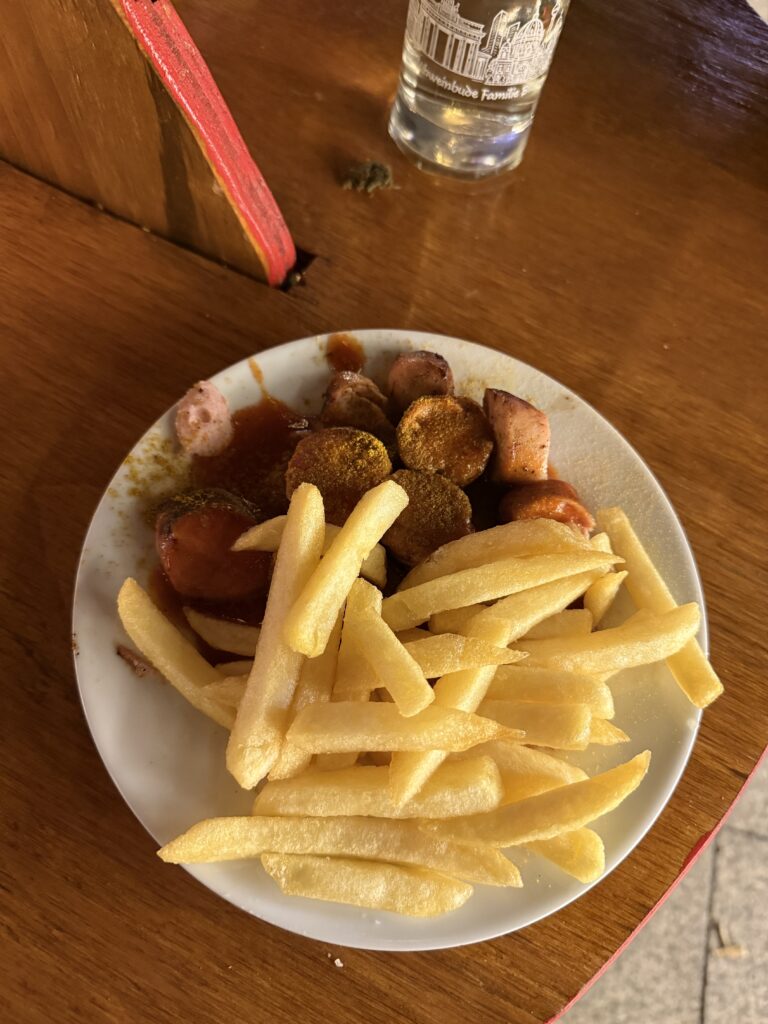
After a quick detour back to our hotel, we took one of the many S-Bahns to the Zoologischer Garten station. Here we found the Christmas Market on Breitscheidplatz, loaded up on some curry fries, got some more glühwein, and enjoyed the last Berlin Christmas Market we’d visit. Feeling still a little hungry, we stopped at the McDonalds at the train station. I think it’s also so interesting to see what other countries have! We got chicken nuggets and Käsespätzle bites with curry sauce. 10/10.
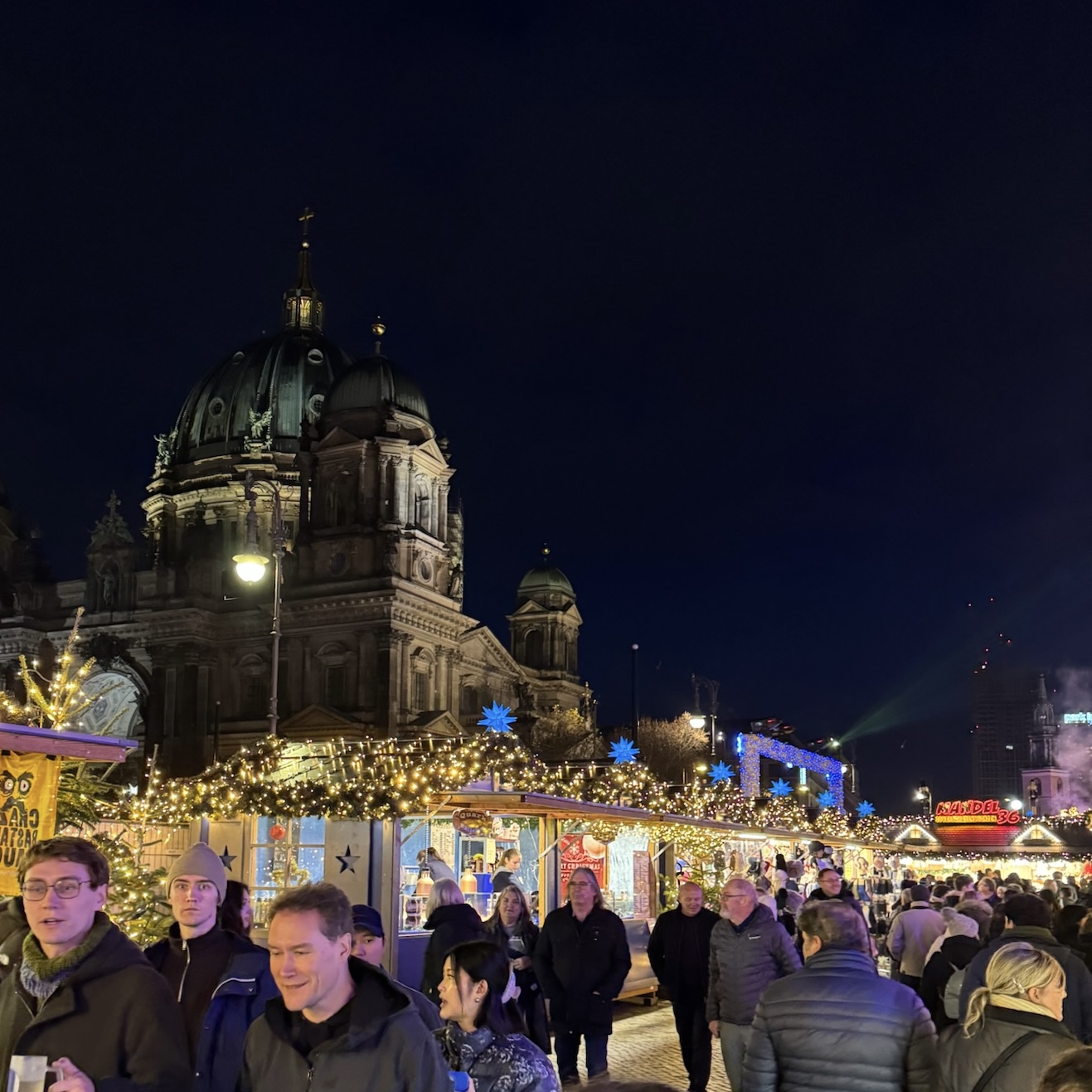
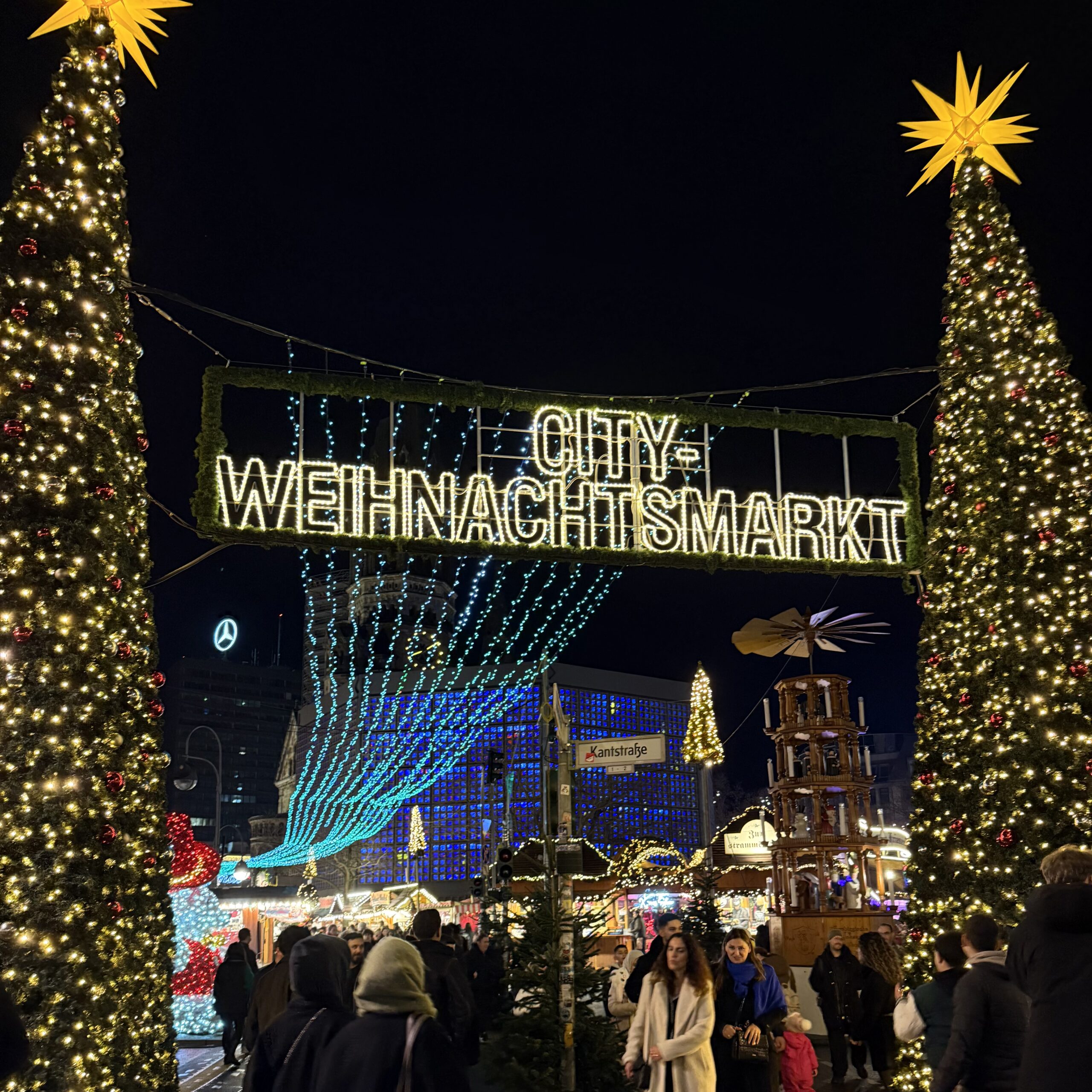
We took the train back to the hotel to pack and rest for an early trip to Prague the next day!
Below, you can find more detail on all the Christmas Markets we visited, the various Historical Sites we stopped at, what we had to Eat & Drink (although check out the Christmas Markets section for market fare), tips on Getting Around Berlin, and a few Practical Tips including where we stayed and what to pack.
Christmas Market Breakdown
Berlin is home to dozens of Christmas markets, each offering a slightly different atmosphere, setting, and style. From refined plazas framed by historic architecture to lively, modern spaces with activities and rides, the variety makes market-hopping especially fun. Here’s a closer look at the Christmas markets we visited, including what stood out at each and how they fit into our itinerary.
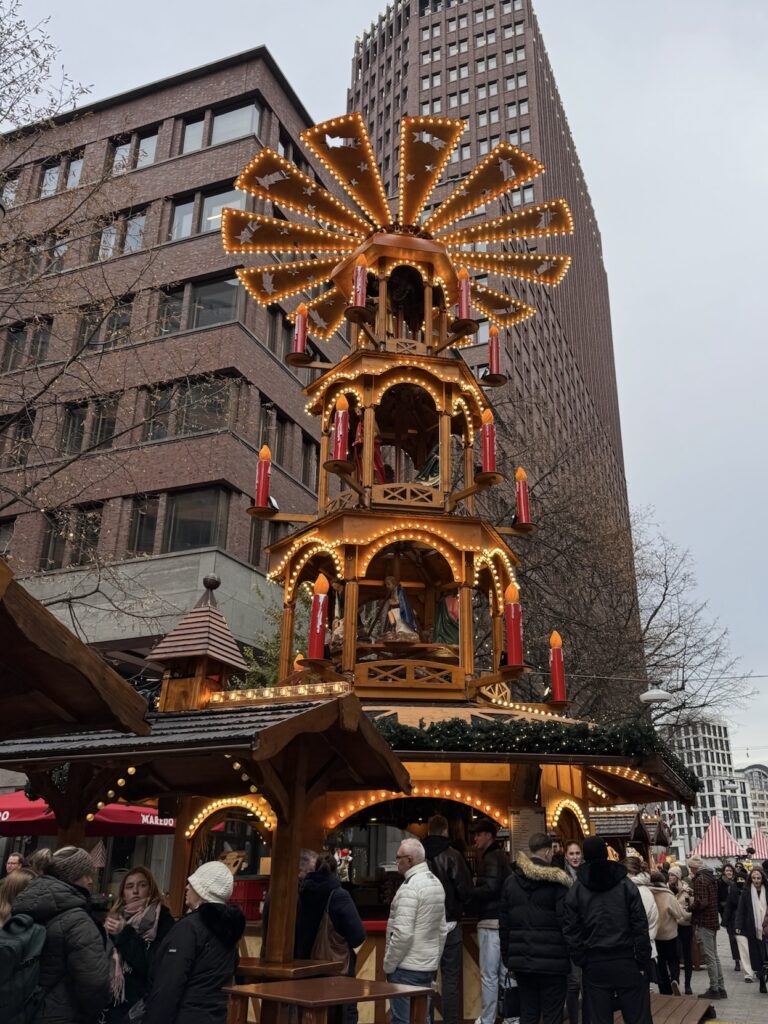
Winterworld at Potsdamer Platz
Winterworld has a lively, modern feel set against Berlin’s contemporary skyline. It’s best known for its outdoor toboggan run and ice rink, giving it a more activity-driven atmosphere than traditional markets. Entry to the area is free, but rides and attractions cost extra.
We each got a glühwein and wandered the market before circling back to get a bratwurst. They had several different options – I went with a traditional one while my friend got the vegan option. It was such a perfect midday stop and was bustling but not overly crowded on a Saturday afternoon.
Christmas Market on Gendarmenmarkt
Often considered one of Berlin’s most elegant Christmas markets, Gendarmenmarkt stands out for its refined setting between historic concert halls and its focus on artisan crafts and high-quality food. The atmosphere feels polished and festive, especially in the evenings. There is a small entrance fee, which helps limit crowds and supports live performances inside the market (check the online schedule and come early for these!).
We arrived at this market later in the evening after a full meal so were not hungry enough to try any of the food (but that didn’t stop me from getting a glühwein!). Honestly, I think this market had my favorite classic mug and I have a little regret not keeping it as a souvenir. We also realized too late that the market had performances during the day, so this would have been a great market to visit earlier in the evening.
Berlin City Hall Christmas Market
Set in front of the red-brick Rotes Rathaus, this market has a classic, family-friendly atmosphere with traditional stalls and a large ice rink winding through the square. It’s lively without feeling overwhelming and draws a mix of locals and visitors. Entry is free, with skating available for a fee.
This was another market we visited fresh after a full meal so didn’t try any of the bites. But a cup of glühwein warmed the hands while we circled through the market. I really appreciated the central ice rink around a historic Neptune Fountain – this would be a great option if you wanted to ice skate!
Humboldt Forum Christmas Market
The Humboldt Forum Christmas Market blends historic surroundings with a modern twist, featuring contemporary stalls and a more curated, cultural feel. It’s quieter than many of Berlin’s larger markets and often highlights creative vendors and unique design-forward gifts. Entry is free, making it an easy stop while exploring Museum Island.
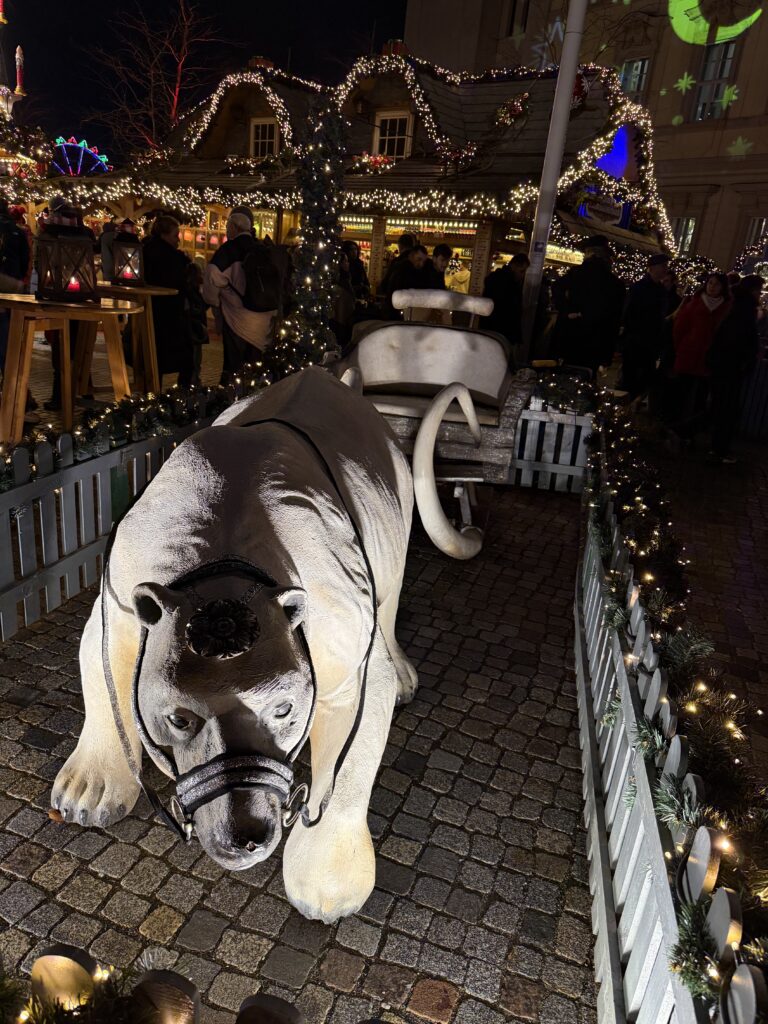
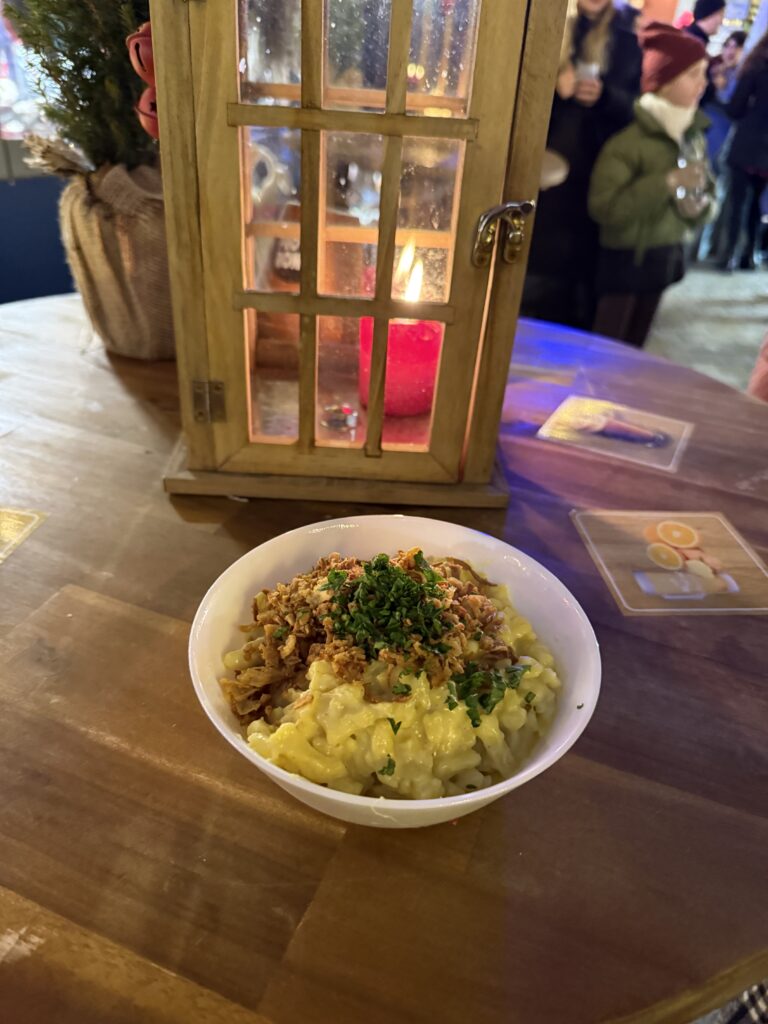
This Christmas Market on Museum Island was pretty busy when we arrived just after sunset. The crowds made it a bit challenging to navigate but we found a Spätzle stall near the back with a nearby table and split a delicious cheesy bowl of noodles. Almost went back for a second round but decided to see what other market foods we could find. I was disappointed there wasn’t a lot of visibility of the various museums after dark, so I would try to prioritize this one during the day!
Christmas Market on Breitscheidplatz
Located next to the Kaiser Wilhelm Memorial Church, this market pairs festive energy with a strong sense of place and history. It’s one of Berlin’s most popular and bustling markets, especially after dark, with classic food stalls, lights, and a lively crowd. Entry is free, and it’s particularly known for its dramatic church backdrop.
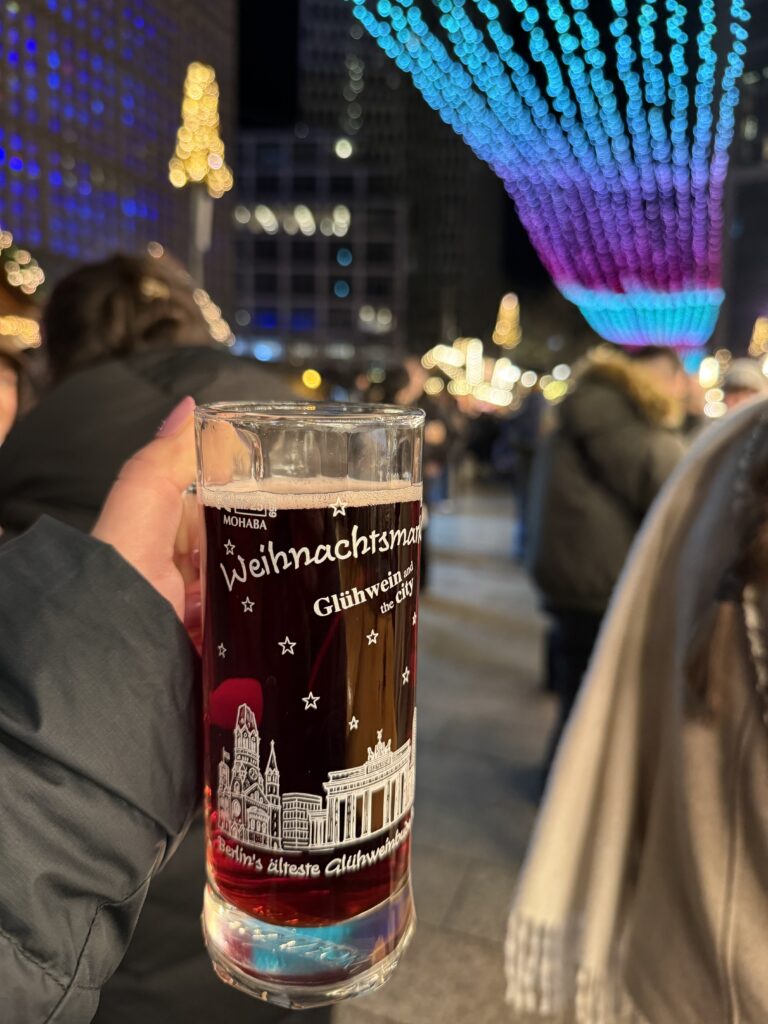
As our final Christmas market, we enjoyed the grandeur of the entrance, the light ribbon marking the track around the market, and the size of the overall market. It was organized in a big loop which made it feel less crowded then some of the ones packed into a square. We enjoyed some currywurst and – you guessed it – another mug of glühwein!
Top Historic & Cultural Sites
Visiting Berlin’s historic and cultural sites helped ground our trip in the city’s complex past. From Cold War espionage to powerful reminders of division and reunification, these stops offered meaningful insight into how history continues to shape Berlin today.
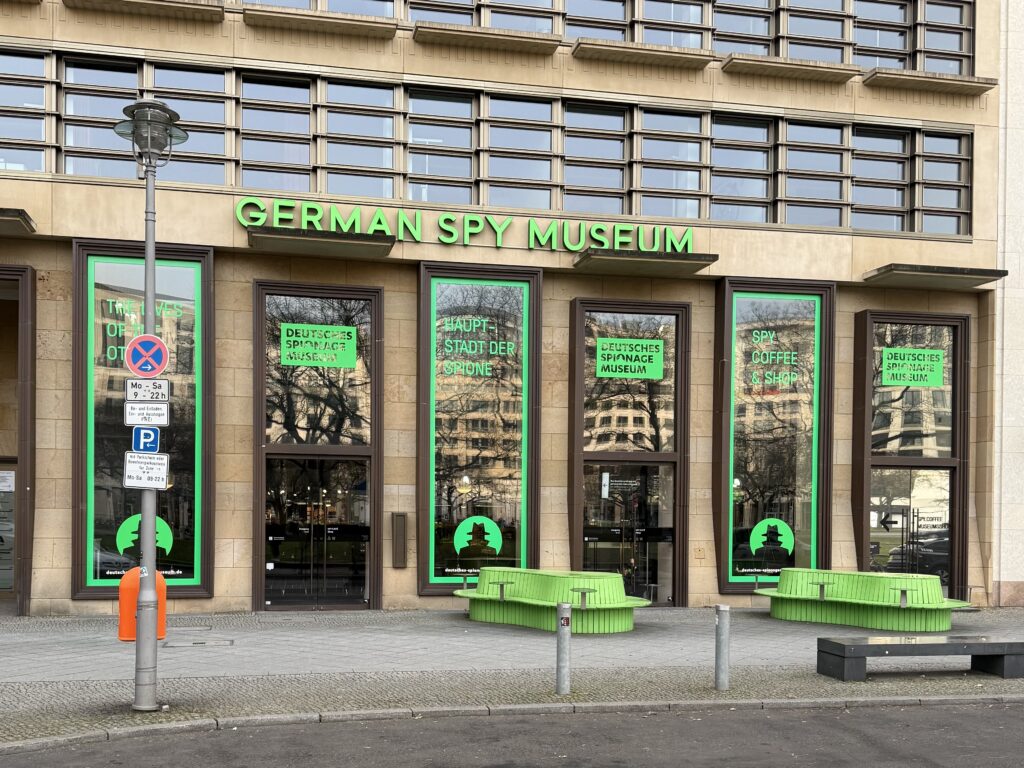
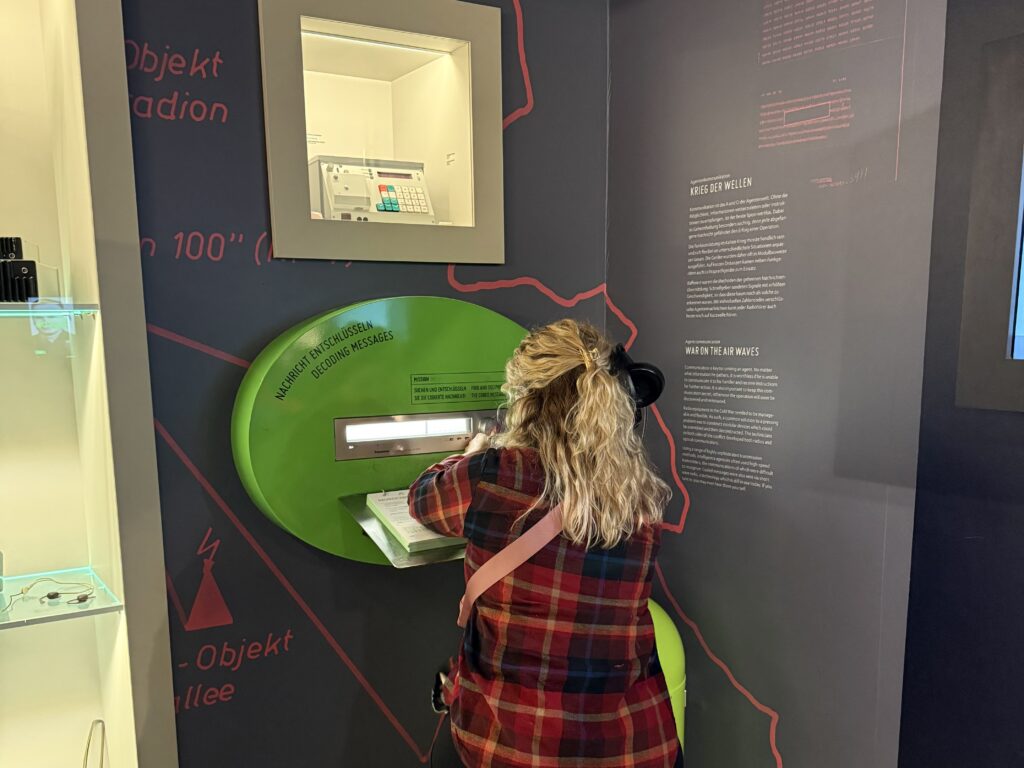
German Spy Museum
The German Spy Museum explores the shadowy history of espionage, with a particular focus on Berlin’s central role during the Cold War. As a divided city at the frontline between East and West, Berlin became a global hub for intelligence gathering, surveillance, and covert operations. The museum uses interactive exhibits to connect historic spy craft with modern debates around privacy, technology, and security.
We really enjoyed the Spy Museum. The interactive exhibits held your attention and helped make the historical elements even more interesting. It was also very interesting to see real clandestine tools used by spy agencies throughout the years. Some of the most fun activities included sweeping a small room for bugs in under two minutes, navigating a laser maze, piecing together shredded documents, and doing a virtual job interview at the end.
Getting there early made a huge difference as were able to participate in the various interactive exhibits without a lot of competition for time. Towards the end of our visit, more people had arrived and we had to wait for people to wrap up activities before we could use them. There was a variety of age ranges – there were definitely parents and children but a good number of adult couples as well.
Overall, I thought the museum was really fun. It may have not been the most traditional use of the short time we had in Berlin, but I think it was time well spent! I would recommend this for anyone who ever dreamed of being a spy or to enjoy some activities during a trip. It’s also a perfect stop for a bad weather day or to entertain children!
East Side Gallery
The East Side Gallery is the longest remaining open-air section of the Berlin Wall and one of the city’s most powerful symbols of reunification. After the wall fell in 1989, artists from around the world transformed this former barrier into a canvas for political expression, freedom, and hope. Today, the murals stand as both a memorial to division and a celebration of creative resistance.
We spent most of our time walking along the street side of the Berlin Wall. This side was covered in large murals filled by various artists since the fall of the wall. I really enjoyed reading the various quotes (many also in English) and appreciating the messages of hope and unity. Especially with everything going on in the world today, a reminder that every small action can make a difference was moving.
If you want to understand more about the individual murals on the wall, I would recommend doing some research before you go. I personally appreciated a casual viewing but for a more avid art fan, I think it would have been helpful to have more background on some of the pieces. Another note is that the sidewalk is along the edge of a busy street so it can be hard to stop and snap pictures and there were some points where it was challenging to get around large groups of people. Picking a time of day with less traffic might have made the experience more pleasant, but I think it was very doable mid Sunday afternoon.
Overall, I would highly recommend this stop! It’s a bit outside of the main center of activies near Alexanderplatz but transportation is so easy. It also combines well with Checkpoint Charlie which provides some additional insights into the history of the wall and Berlin during the Cold War.
Checkpoint Charlie
Checkpoint Charlie was the most famous crossing point between East and West Berlin during the Cold War, used primarily by diplomats, journalists, and foreign visitors. It became an international symbol of political tension, escape attempts, and the stark divide between two ideologies. While the original checkpoint no longer stands, the site remains an important place to reflect on Berlin’s role in one of the most defining conflicts of the 20th century.
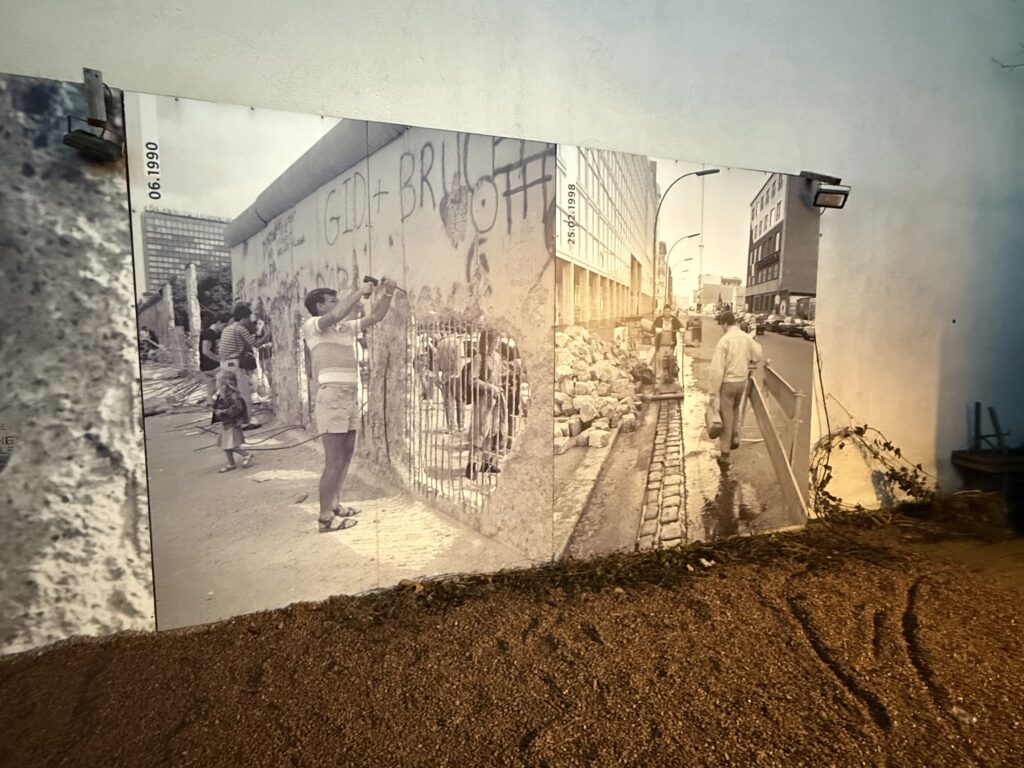
The checkpoint and signage itself was interesting, but I found the most rewarding part of the visit to be the adjacent plaza that was lined with historic information about the wall and life during the Cold War. Inside the square, there was a few pieces of wall with descriptions about how different versions of the wall were engineered to withstand escape attempts. We probably spent about 30-45 minutes here as the sun set reading.
Expect this popular destination to have some crowds and be ready to wait if you’d like a specific photo opportunity at the checkpoint. I would also highly recommend buffering some additional time to check out the nearby informational plaza to really get a sense of the importance of the checkpoint during the Cold War.
There isn’t a lot to do at Checkpoint Charlie, but I think it’s still worth a stop during your trip to Berlin. Especially combined with other elements such as the East Side Gallery, it’s an impactful monument to remember how the city itself was divided not that long ago.
Food & Drink Highlights
With so many Christmas markets to explore, we spent most of our time in Berlin snacking rather than committing to full meals. That made Café Father Carpenter feel like a special find—a cozy brunch stop that offered a comforting pause from market food and fueled us up for a full day of winter wandering.
Café Father Carpenter
Münzstraße 21, 10178 Berlin, Germany
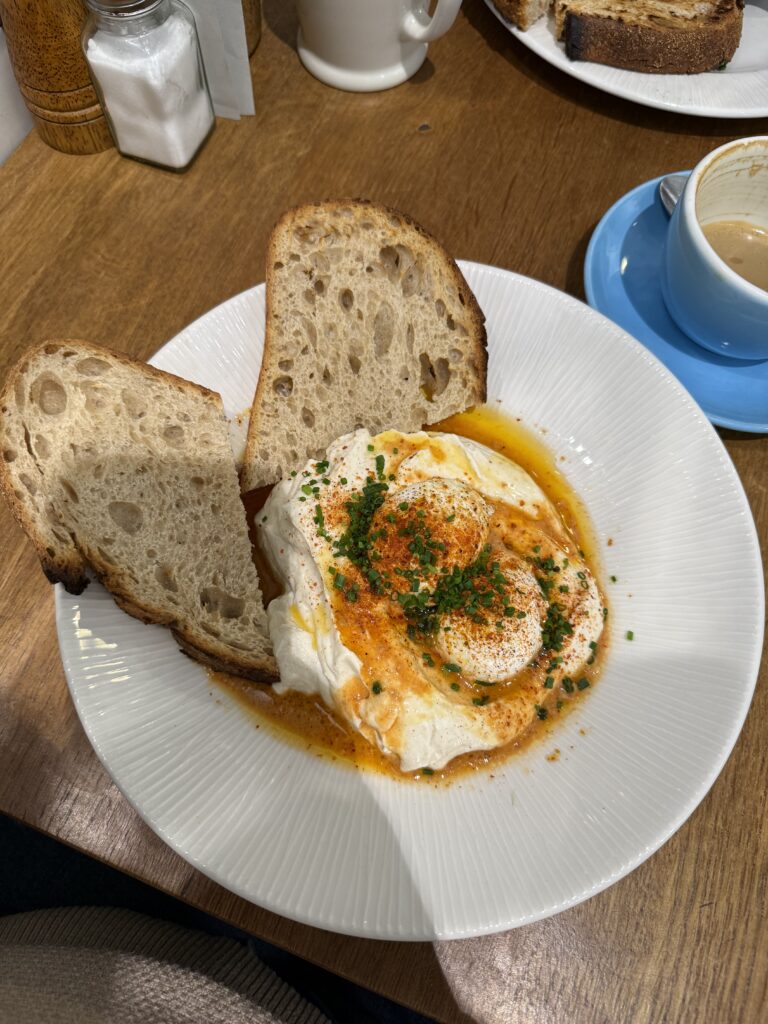
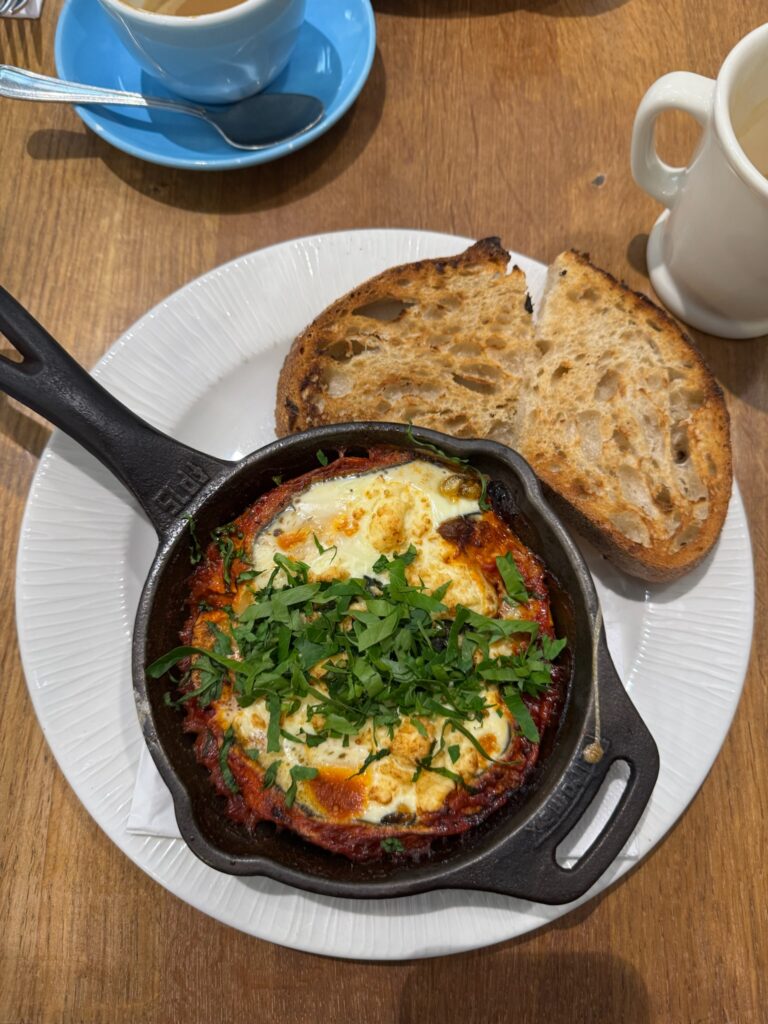
Café Father Carpenter had such a fun and diverse menu! We started off with coffee (I got a latte and my friend ordered a dirty chai) and then ordered the Turkish Eggs and Spinach and Feta Shakshuka. Finally, we split the Lemon & Poppyseed Cake as a sweet treat and admired others who had ordered the Vegan Banana Bread.
This was such a cute little spot located in a small quiet courtyard and we really appreciated the variety of cusine on the menu. I wasn’t really expecting to each a Turkish breakfast in Berlin, but it was such a refreshing break from all the fried market food we’d been focused on. I highly recommend this as a spot for brunch – a great way to fuel up for a day of exploring!
Getting Around Berlin
Berlin’s size and spread make public transportation an essential part of exploring the city, but thankfully it’s efficient, affordable, and easy to use. With an extensive network of S-Bahns, U-Bahns, and trams, getting between neighborhoods and major sights is straightforward—and pairing transit with plenty of walking is the best way to experience the city.
Quick Transit Tips:
- Berlin’s S-Bahns and U-Bahns create a rail network that spans the city center and makes travel around the city easily available.
- Use the BVG app to purchase and manage tickets. There is no place that you need to scan your ticket to enter in Berlin, but you can get stopped at a station or on a train and will need to present your validated ticket.
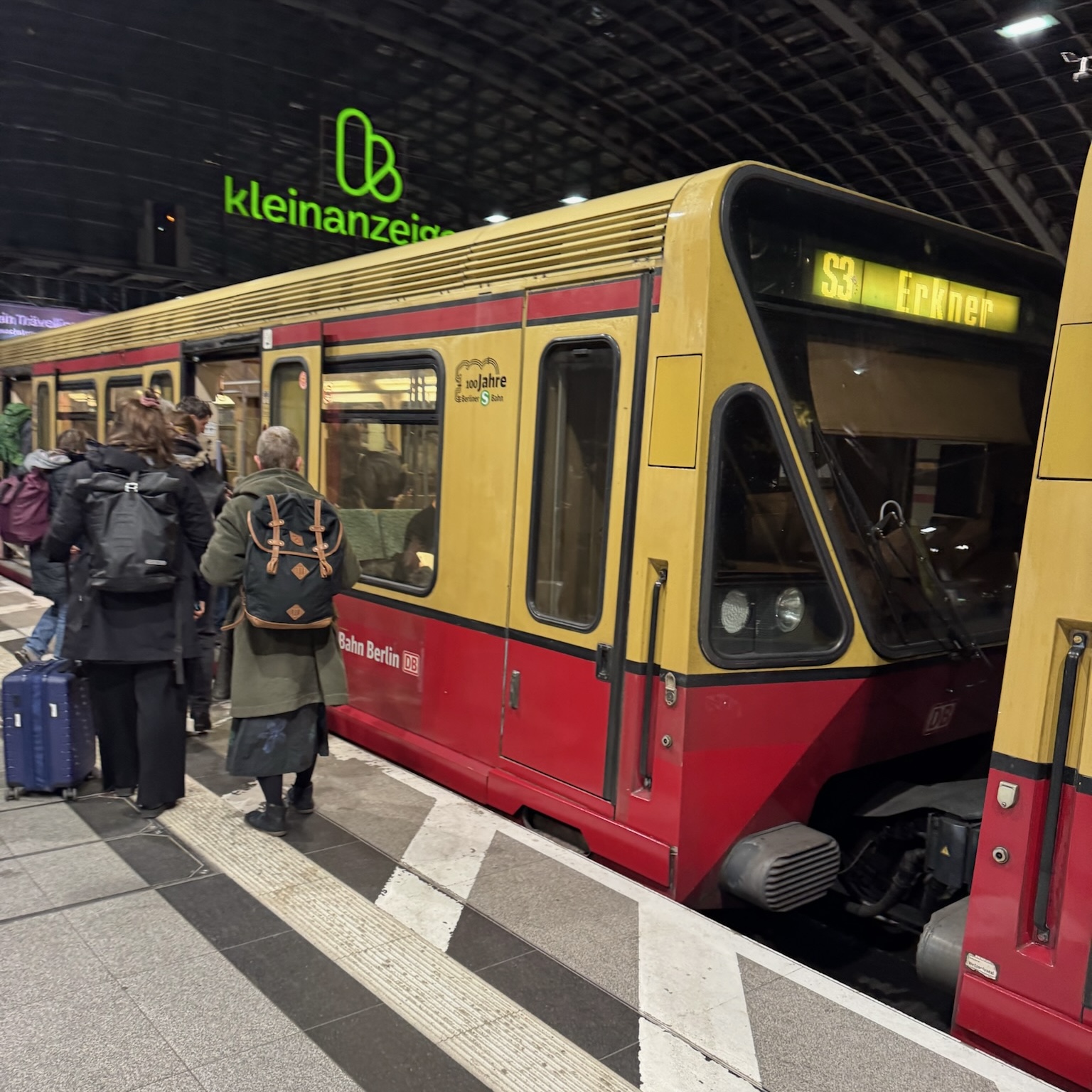
- Google Maps is a great tool but beware it advised us to board regional trains instead of the S-Bahn. I’m not sure that the tickets we purchased on BVG are valid for those routes, so make sure you’re taking a S-Bahn train (denoted with the S logo) at major stations.
In the City
My love of public rail-based transit systems continued in Berlin as we heavily utilized trains to get around the city. Berlin has a network of S-Bahns, U-Bahns, and trams. All of these are available by purchasing a transit pass to the city. We used the BVG app although you can also purchase physical tickets at most stations and purchased a 24-Hour day pass each day we were in the city. We did consider the Berlin WelcomeCard which gives you access to public transit plus certain discounts at tourist attractions but didn’t think it was worth it for our personal itinerary.
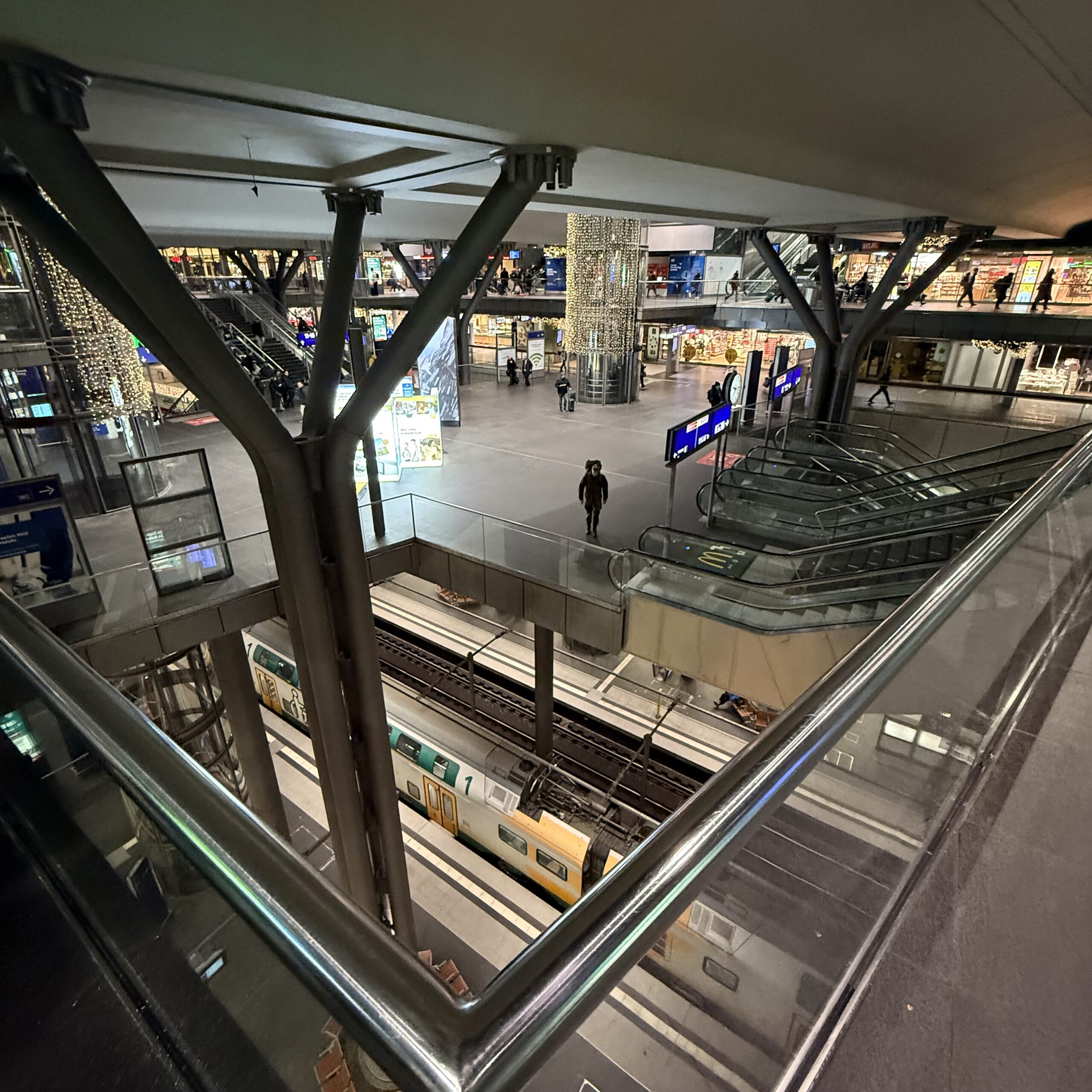
Our hotel was very close to Berlin’s main station or Hauptbahnhof (hbf) which was a great home base to the main thoroughfare of S-Bahns as well as the U5 which could be used to access the other underground metro lines connecting Berlin. Similar transit hubs exist at Alexanderplatz and Ostbahnhof. Even with the availability of public transit, we walked a ton! We averaged just over six miles a day of walking while in Berlin, so definitely wear comfortable shoes and strategically augment walking with the available transit system!
Practical Tips
Neighborhoods & Where to Stay
Like most of the rest of the trip so far, we chose to stay by the main train station due to our travel logistics and convenience. It was not the most appealing part of the city, but it was next to the main station which made transit across the city super simple. If I were to visit Berlin again, I’d look for accommodations in Mitte near Alexanderplatz as I believe it offers a similar level of transit convenience but is in a more walkable neighborhood with plenty of dining options nearby.
Weather & Packing
Berlin was chilly in December! This was probably our coldest stop on the entire 8-day trip and I was glad I had my heavier jacket both during the day and at night. We were blessed with sunny skies but breezy days so overall, the weather met my expectations for winter in Berlin. I would pack warm layers and bring gloves and a scarf to stay cozy.
Safety & Solo Travel Recommendations
Berlin would be a great spot for solo travel! Germans don’t have the reputation of being the most friendly, but everyone we spoke to was helpful and polite. English was widly spoken across the city and even signs in German often have latin roots that become easy to pick up on. And overall the city was well lit with a Christmas atmosphere and bustling enough that you’re never truly alone. I would definitely go back to Berlin solo.
Prague Reflections & Summary
Berlin surprised me with how seamlessly it blended heavy history with everyday vibrancy. Over just two days, we moved between Cold War landmarks, powerful memorials, interactive museums, and lively Christmas markets, all connected by an incredibly efficient transit system. While the city is sprawling compared to other European capitals, its neighborhoods feel distinct and purposeful, making it easy to experience a wide range of perspectives without feeling overwhelmed.
The most impactful moments came from Berlin’s historic and cultural sites. Walking along the East Side Gallery and standing at Checkpoint Charlie made the reality of the city’s division feel tangible, while the Memorial to the Murdered Jews of Europe and its nearby counterpart honoring persecuted LGBTQ+ individuals offered quieter, more contemplative spaces to process that history. The German Spy Museum added a more interactive and accessible layer to understanding Berlin’s Cold War role, proving that museums here don’t shy away from experimentation or engagement.
At the same time, Berlin in December knows how to balance weight with warmth. Christmas markets provided natural pauses throughout the day—places to warm up with glühwein, snack instead of committing to full meals, and soak in the festive atmosphere. While this trip only scratched the surface of what Berlin has to offer, it left me with a strong appreciation for the city’s honesty, resilience, and complexity. Berlin isn’t a place you simply visit for highlights—it’s a city that invites you to reflect, wander, and come back for more time when you’re ready to dig deeper.
Related Posts